Cochise County Commercial Roofs

Sierra Vista Commercial Roofing Contractor

As a Sierra Vista commercial roofing contractor, we install, replace, and repair TPO, EPDM, and metal roofs on offices, clinics, shops, and warehouses, starting with an inspection.

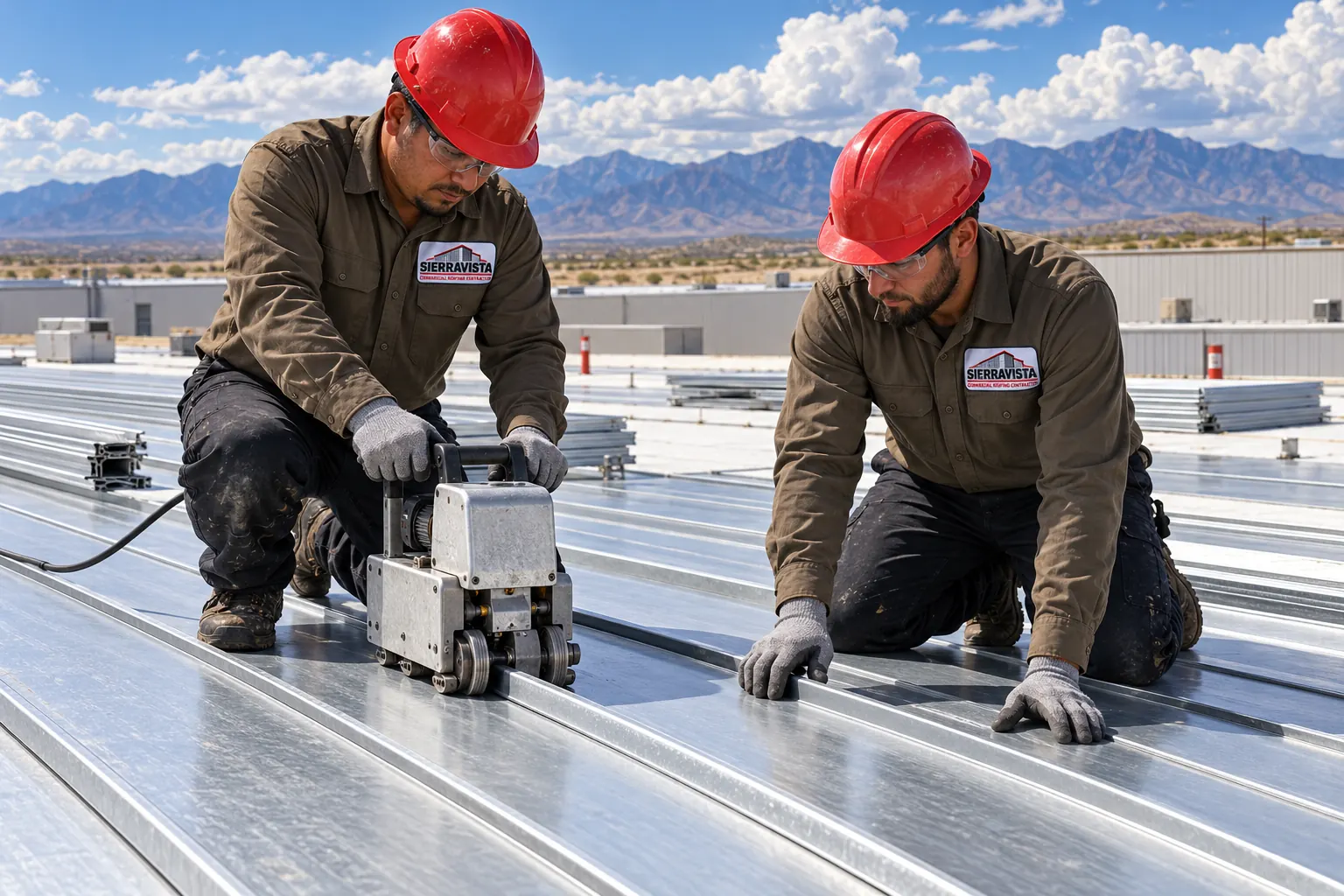
Two roofers closing standing-seam metal roof panels with an electric seamer in Sierra Vista, AZ

How We Work

  • Roof inspection before any proposal
  • Core cuts to check wet insulation
  • Work staged around open businesses
  • Daily dry-in during monsoon season

Where Sierra Vista Roofs Start Leaking

At about 4,600 feet, sun, wind, monsoon storms, and freezing nights each wear a different part of a commercial roof. These are the conditions we find most often.

Sun

Dried Sealant At Curbs And Pitch Pans

You See
Cracked, shrunken sealant around rooftop units, pipe supports, and pitch pans.
What It Means
High-altitude UV bakes sealant faster than the membrane around it. Water follows the gap into the deck, so the ceiling stain often shows up feet away from the curb.
Wind

Lifted Edge Metal And Loose Fasteners

You See
Coping or drip edge that rattles, and screws backing out of metal panel laps.
What It Means
Spring wind pries at the roof edge first. Once the perimeter lifts, the next gust can peel membrane or bend panels, so edges get fastened before anything else.
Monsoon

Clogged Drains And Ponding Water

You See
Water standing for days after a storm, dust and dry grass packed into scuppers.
What It Means
Summer downpours dump more water than a blocked drain can move. Standing water adds weight, finds open seams, and speeds membrane wear.
Hail

Bruised Membrane After Hail

You See
Dark spots or fine cracks on the membrane, dents in metal panels and vents.
What It Means
Hail can crack a roof surface without an immediate drip. The damage tends to turn into a leak months later, which is why we check roofs after big storms.
Freeze

Seam Gaps From Freeze-Thaw

You See
Hairline openings at seams and laps that appear after winter.
What It Means
Cold nights shrink the membrane and warm afternoons stretch it. Over a few winters, weak seams open just enough to let water reach the insulation.
Age

Soft Spots And Wet Insulation

You See
A spongy feel underfoot and ceiling stains that return after every patch.
What It Means
Water trapped under the membrane soaks the insulation and can rot the deck. A core cut shows how far it spread and whether repair still makes sense.

Which Roof Fits Your Building

Roof slope, building use, and how long you plan to own the property decide the system. These local pairings are a starting point, and the inspection settles it.

Building TypeCommon FitWhy It Works Here
Medical or professional office with a flat roofTPOWhite sheet reflects high-altitude sun and trims cooling load
Older retail building with an existing rubber roofEPDMNew sheet ties into the dry EPDM already on the roof
Warehouse or pre-engineered steel buildingStanding-seam metalSheds monsoon rain fast and lasts for decades
Industrial shop with heavy rooftop equipmentReinforced TPO or EPDM with walkwaysStands up to penetrations and service foot traffic
Historic commercial building in TombstoneMaterial the local review approvesDesign rules govern any roofing seen from the street

Planning A Reroof Before Monsoon Season?

A spring inspection finds weak seams and blocked drains before storm season opens on June 15. Send a few roof details and we will put together a free ballpark estimate.

What To Have Ready

  • Rough roof size or a site plan
  • Building use and business hours
  • Photos of ceiling stains or leaks
  • Current roof type, if you know it

TPO, EPDM, Industrial, And Metal In Sierra Vista

Most commercial buildings in town carry one of these systems. Each card shows where the system fits and how its seams or panels are attached.

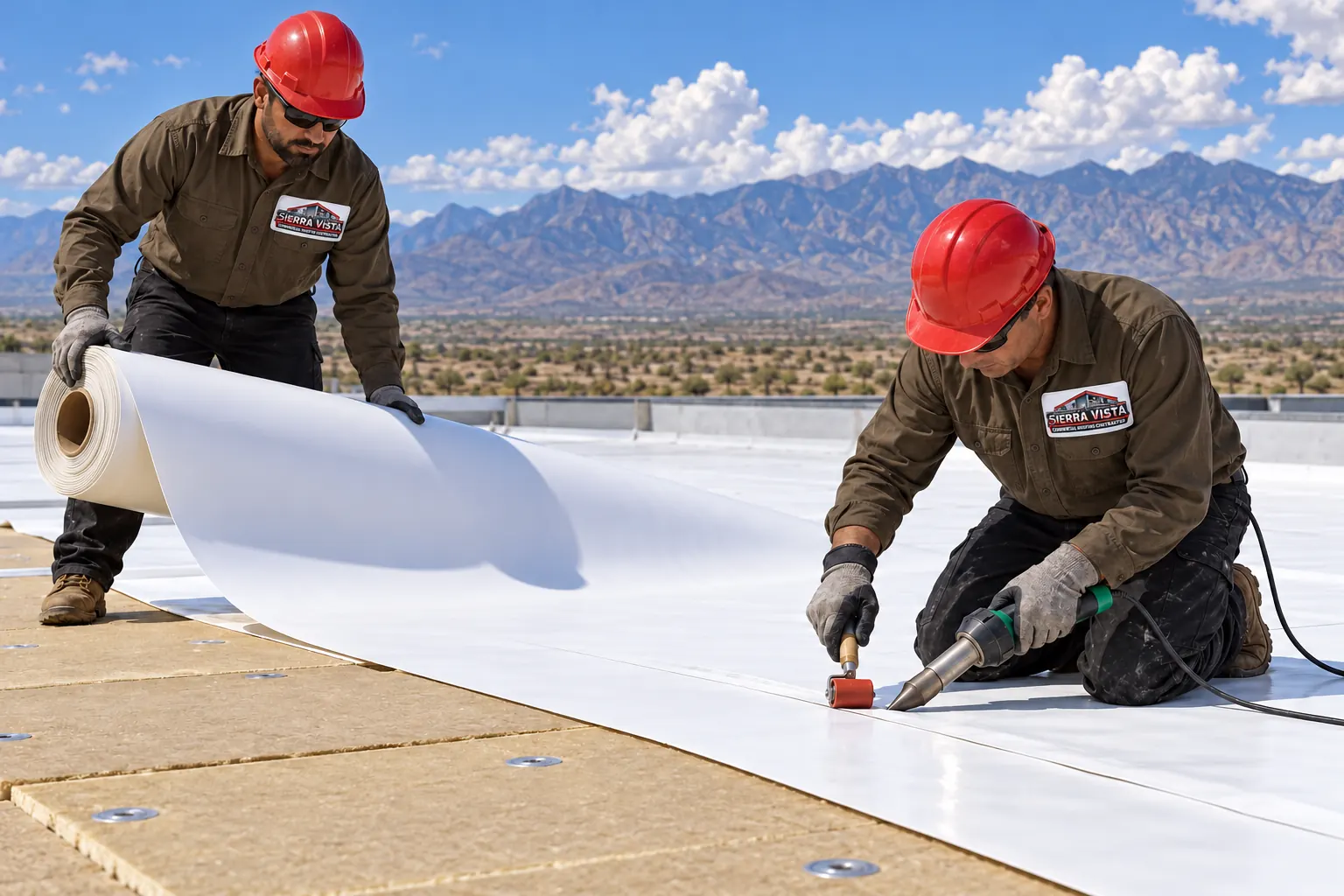
Roofers unrolling white TPO membrane and welding the lap on a flat commercial roof

TPO Roofing

Roof Slope
Flat and low-slope
Seams
Hot-air welded
Common Building
Offices, clinics, retail

White TPO keeps sun off offices and clinics that run cooling most of the year, and welded seams hold when monsoon water sits on a flat roof.

TPO roofing in Sierra Vista
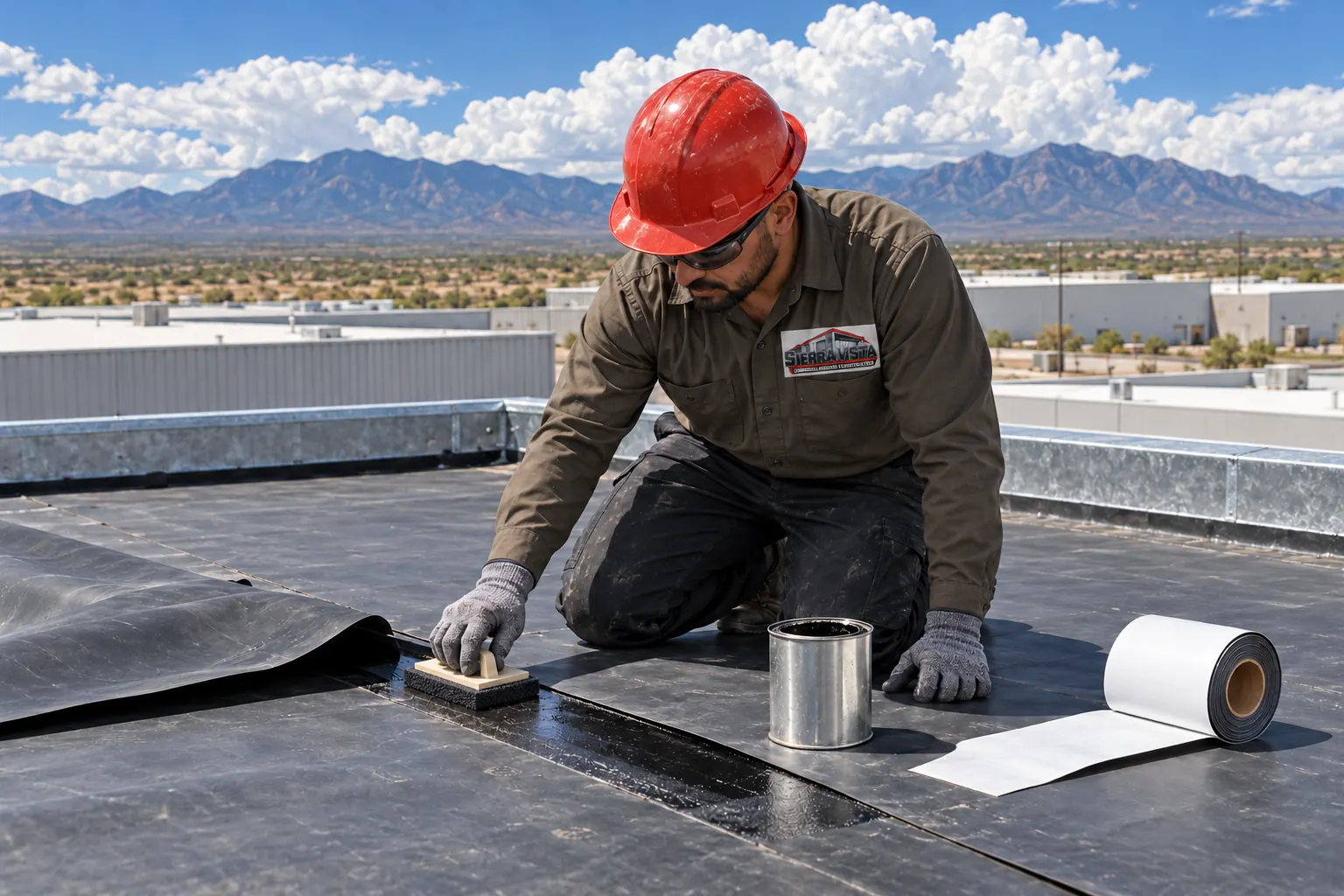
Roofer priming a black EPDM lap before applying seam tape

EPDM Roofing

Roof Slope
Flat and low-slope
Seams
Taped or adhered
Common Building
Older retail and offices

Rubber sheet stays flexible through cold nights, and new EPDM ties cleanly into a dry existing roof. Repairs stay simple for maintenance staff to watch.

EPDM roof repair and replacement
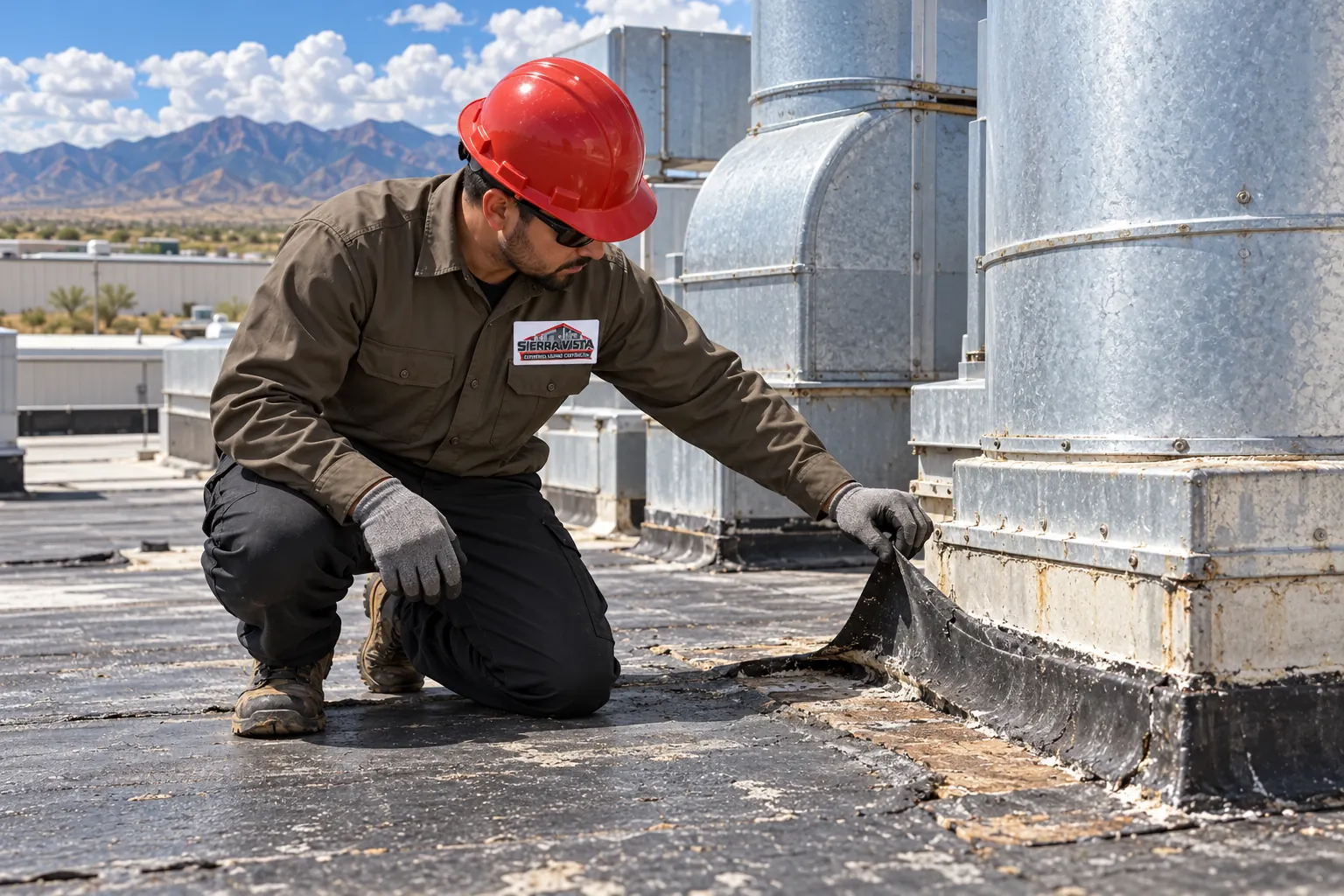
Roofer inspecting failed flashing at the base of process ducts on an industrial roof

Industrial Roofing

Roof Slope
Low-slope or metal
Seams
Reinforced at curbs and stacks
Common Building
Shops, plants, storage

Process exhaust, heavy units, and service traffic punish a roof. We reinforce flashings, lay walkway pads, and taper insulation toward the drains.

Industrial roofing for warehouses and shops
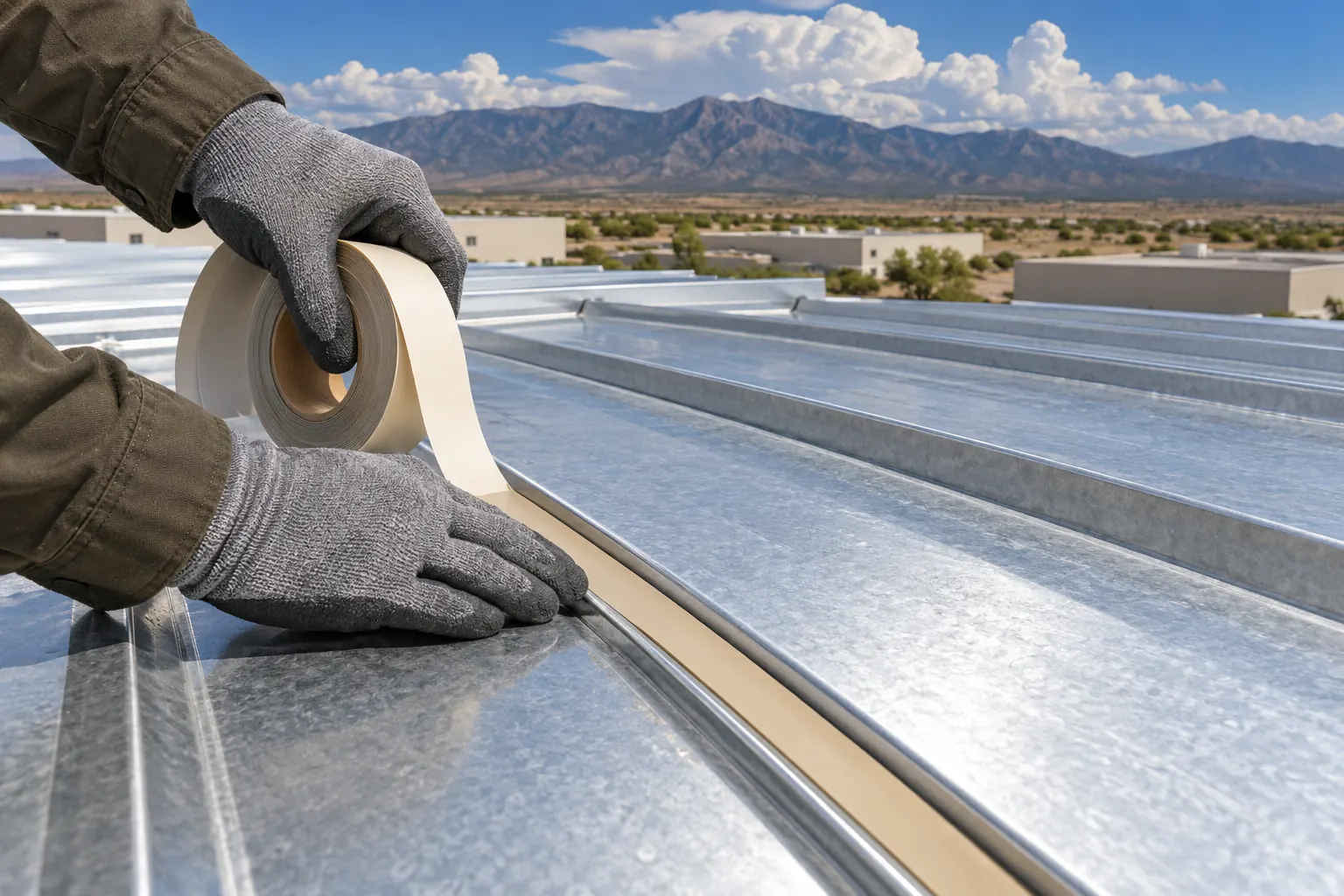
Gloved hands pressing butyl tape along a metal roof panel side lap

Commercial Metal Roofing

Roof Slope
Sloped and low-slope
Seams
Standing seam or screwed
Common Building
Warehouses, shops, barns

Standing-seam panels shed storm water quickly and resist uplift when properly fastened. Older screwed roofs get new fasteners, butyl at the laps, or a retrofit.

Standing-seam metal roofing

How A Commercial Roof Job Runs

Here is the order the work runs in, from the core sample to the photos you keep.

  1. On The Roof

    Step 1: Inspect Your Roof

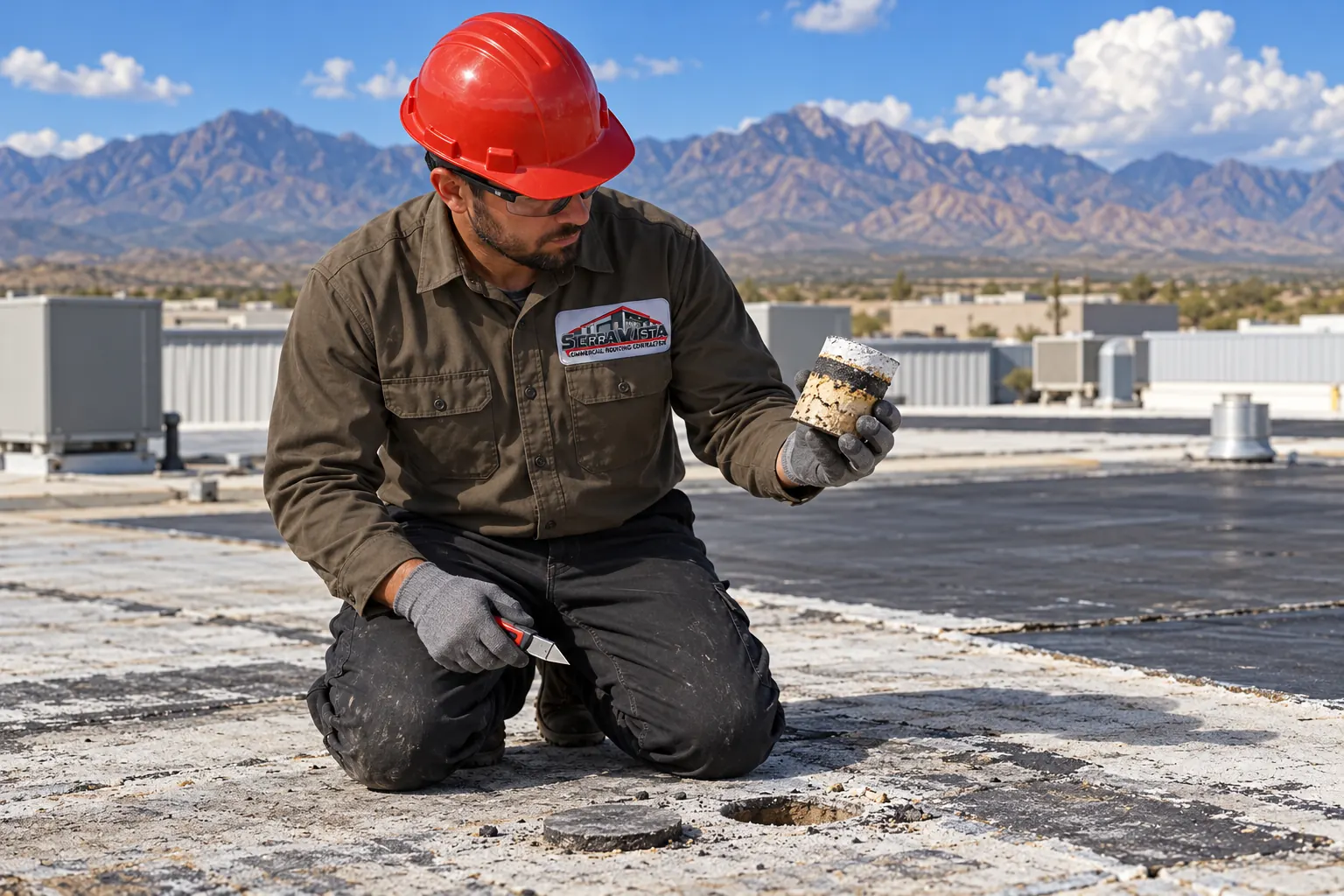
    We walk the field, seams, flashings, drains, and edges, and cut a core where the deck feels soft. You get photos and plain notes on what we found.

    Roofer holding a core sample cut from a flat commercial roof
  2. Paperwork

    Step 2: Choose Repair Or Replacement

    Moisture results drive the call. Dry insulation and local damage point to repair, while widespread wet insulation or repeat leaks point to a new roof system.

  3. Paperwork

    Step 3: Pull The Right Permit

    Sierra Vista, Huachuca City, Tombstone, and Benson run their own building departments. Roofs in Whetstone, Hereford, and Palominas go through Cochise County Building Safety.

  4. At The Building

    Step 4: Plan Lifts Around Customers And Deliveries

    Crane lifts, dumpsters, and noisy tear-off are planned around parking, entrances, and opening hours. In monsoon season, any open roof section is sealed before afternoon storms build.

  5. On The Roof

    Step 5: Install And Walk It With You

    Seams are probed, drains cleared, and flashings checked before we leave. We walk the roof with you and hand over photos of each detail we worked on.

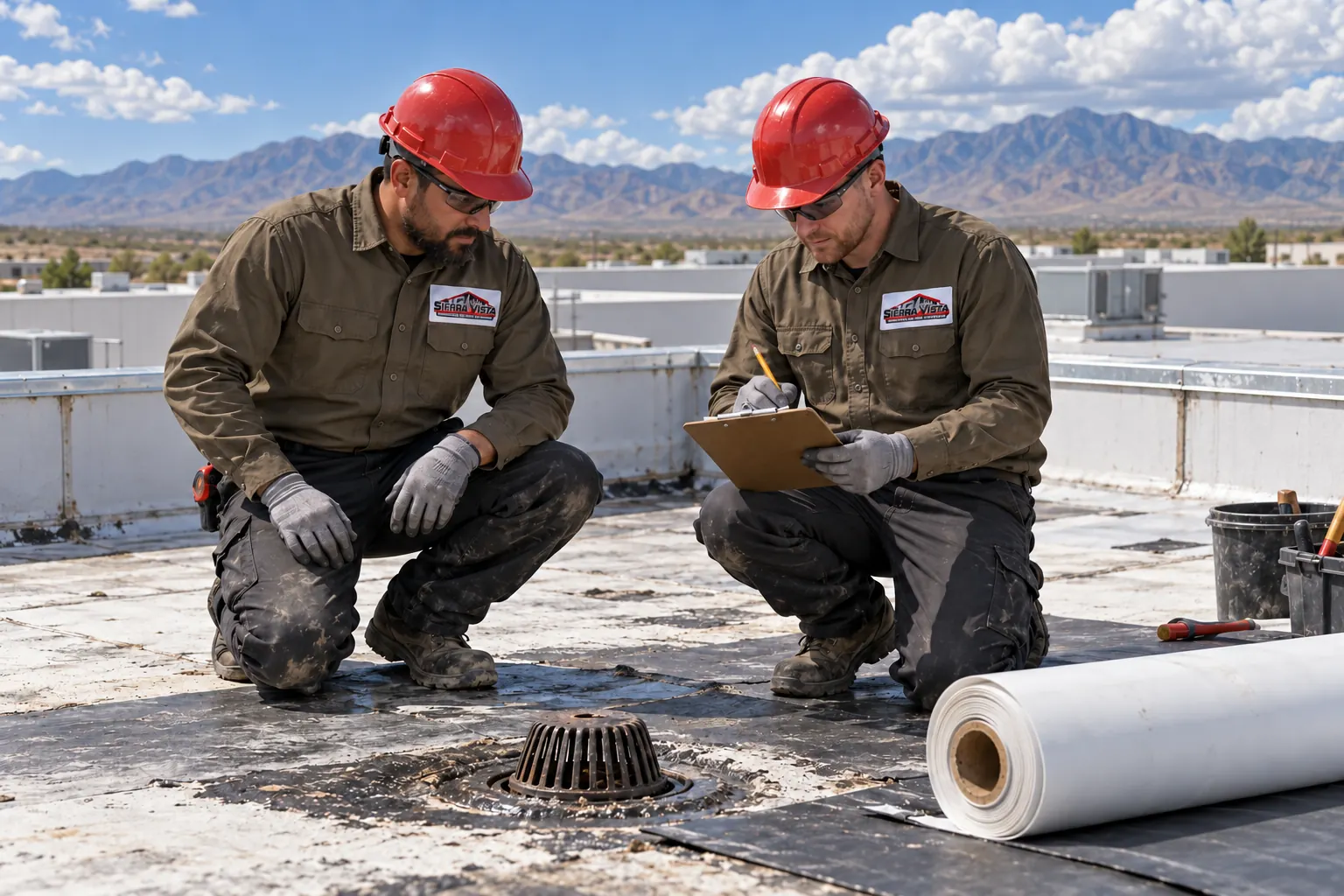
    Crew lead checking a clipboard beside a roof drain while a second roofer looks on

What Changes After A New Roof

These are the day-to-day differences owners notice once a worn roof is replaced or properly repaired.

Living With A Worn Roof

  • Buckets under the same ceiling stain after every storm
  • Water standing near drains for days after rain
  • Edge metal that rattles in spring wind
  • Patches stacked on patches at curbs and pipes
  • Staff guessing where the next leak will show up
  • Hot upper rooms under a dark, sun-baked membrane

After The Roof Work

  • Seams welded, taped, or seamed and checked before we leave
  • Drains and scuppers clear, with taper moving water toward them
  • Edges fastened and capped to hold against gusts
  • New flashing at every curb, pipe, and stack
  • Photo records of the roof for budget planning
  • A reflective surface where cooling costs matter

Commercial Roofing Along The San Pedro Valley

We work in Sierra Vista and six nearby Cochise County communities. The river runs north past most of them, and four state routes tie them together.

Service area map around Sierra Vista along the San Pedro River, not to scaleThe San Pedro River runs north from the border past Palominas and Hereford, east of Sierra Vista, west of Tombstone, and on to Benson. SR 90 runs north through Huachuca City and Whetstone to I-10; SR 92 runs southeast through Hereford and Palominas; SR 82 and SR 80 reach Tombstone.Fort HuachucaI-10SR 90SR 92SR 82SR 80San Pedro Riverflows northSierra VistaHuachuca CityWhetstoneBensonTombstoneHerefordPalominasNot to scaleN
  • Huachuca CityNorth on SR 90 · west of the river

    Pre-engineered steel buildings and shops tied to Fort Huachuca, where condensation drips and true leaks get sorted out first.

  • WhetstoneNorth on SR 90 at SR 82 · west of the river

    Stand-alone buildings at an open crossroads, where edge metal and corner fastening carry the wind load. County permits apply.

  • TombstoneNortheast via SR 82 or SR 80 · east of the river

    Adobe, wood, and brick buildings in a National Historic Landmark district, many with flat roofs hidden behind tall parapets.

  • BensonNorth on SR 90 and I-10 · on the river

    Rail and highway buildings along I-10, where tear-off and crane lifts are planned around loading docks and truck schedules.

  • HerefordSoutheast on SR 92 · near the Hereford Road crossing

    Small commercial buildings where a worn flat roof can be converted to metal panels over retrofit framing.

  • PalominasSoutheast on SR 92 · at the river crossing

    Rural shops and equipment buildings with exposed-fastener metal roofs that need screws, washers, and laps kept tight.

Questions For A Sierra Vista Commercial Roofing Contractor

What should we check after a monsoon hailstorm?

Have the roof inspected even if nothing is dripping yet. Hail can crack a surface and bruise a membrane without an immediate leak, and those spots tend to open months later.

Until then, photograph the ceilings, keep staff off the roof, and write down the storm date for your insurance file. We check the field, the flashings, and every rooftop unit.

Can a coating buy time on an older flat roof?

On the right roof, yes. A coating can extend a membrane or metal roof that is dry and well adhered but showing surface wear. It does nothing for wet insulation or a failing deck, so we run a moisture check first. A reflective coating also cuts heat gain from the high-desert sun.

Is a permit required to reroof a building inside city limits?

Plan on one. The City of Sierra Vista lists commercial reroofing in its building fee schedule, priced by job value, and its adopted codes include the 2018 International Building Code. The permit is part of our job plan, and inspections are scheduled around your business.

Which roof system costs less up front?

The roof itself matters more than the system name. Tear-off versus recover, how much insulation is wet, deck repairs, membrane thickness, and the number of curbs and penetrations move the price more than the sheet does. A free ballpark estimate gives you a range, and the inspection firms it up.

What does the first roof inspection cover?

Everything that can let water in. We check the membrane or panels, seams and laps, fasteners, flashings at walls and curbs, drains and scuppers, and edge metal, then cut a core wherever moisture is suspected. You get photos and findings in plain language before any recommendation.

Why do flat roofs wear faster at Sierra Vista's elevation?

Strong sun at about 4,600 feet dries sealants and older membranes. The city also averages about 45 nights a year at or below freezing, so seams flex through winter, and roughly 63% of the year's rain falls from July through September. Each force works on a different part of the roof.

Get A Roof Plan For Your Sierra Vista Building

Tell us about the roof, or call to talk it through. We will inspect it and lay out repair or replacement options in plain language.

Call UsGet A Free Estimate