TPO, EPDM, Industrial, Metal

Sierra Vista Commercial Roofing Services

Sierra Vista commercial roofing services for low-slope and metal roofs: new installs, tear-off and replacement, recovers where the roof allows, and repairs on all four systems.

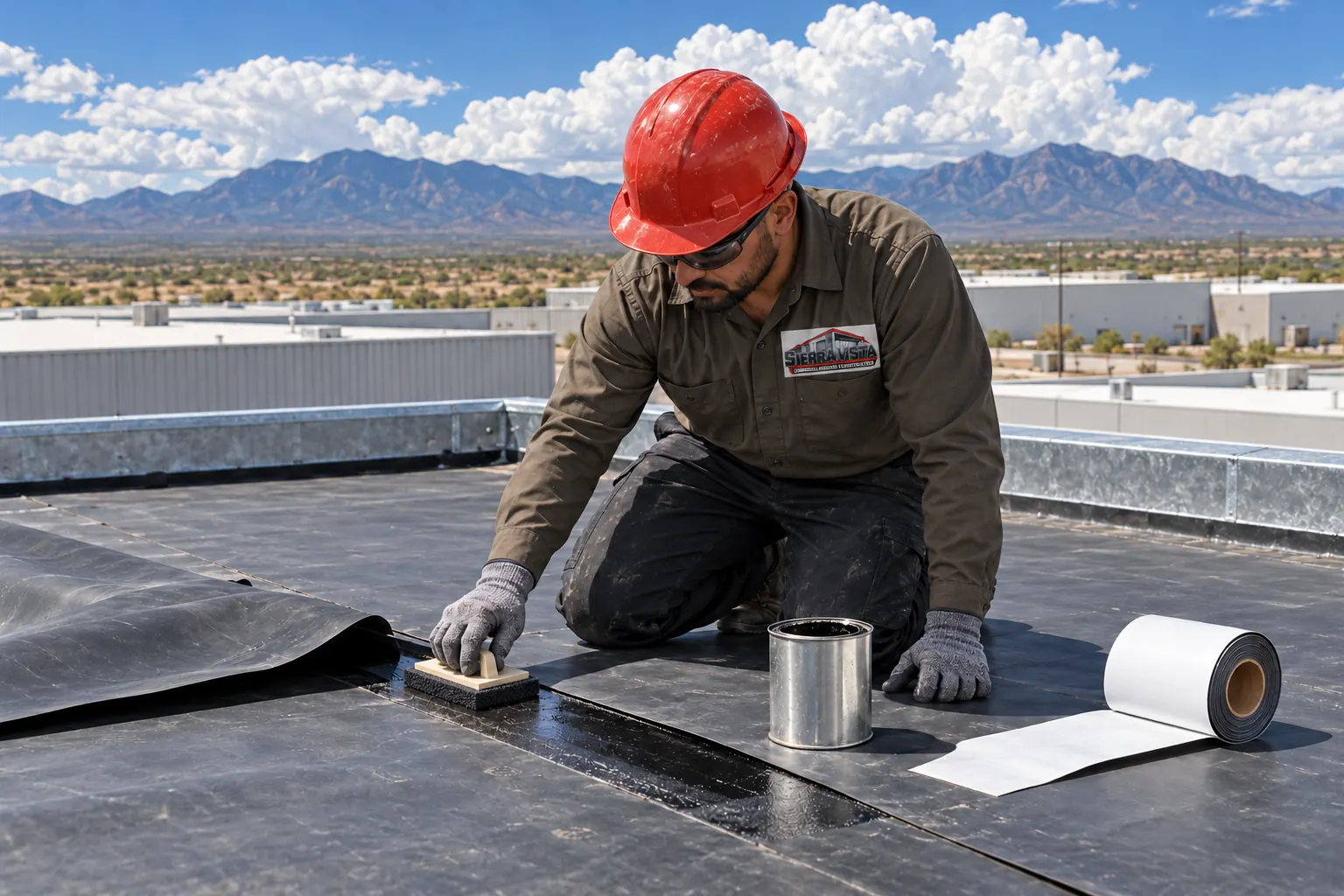
Roofer scrubbing primer onto a black EPDM lap on a Sierra Vista commercial roof

Commercial Roofing Services For Sierra Vista Roofs

Pick the card that sounds like your building. Each one lists where the system earns its place and what we check before recommending it.

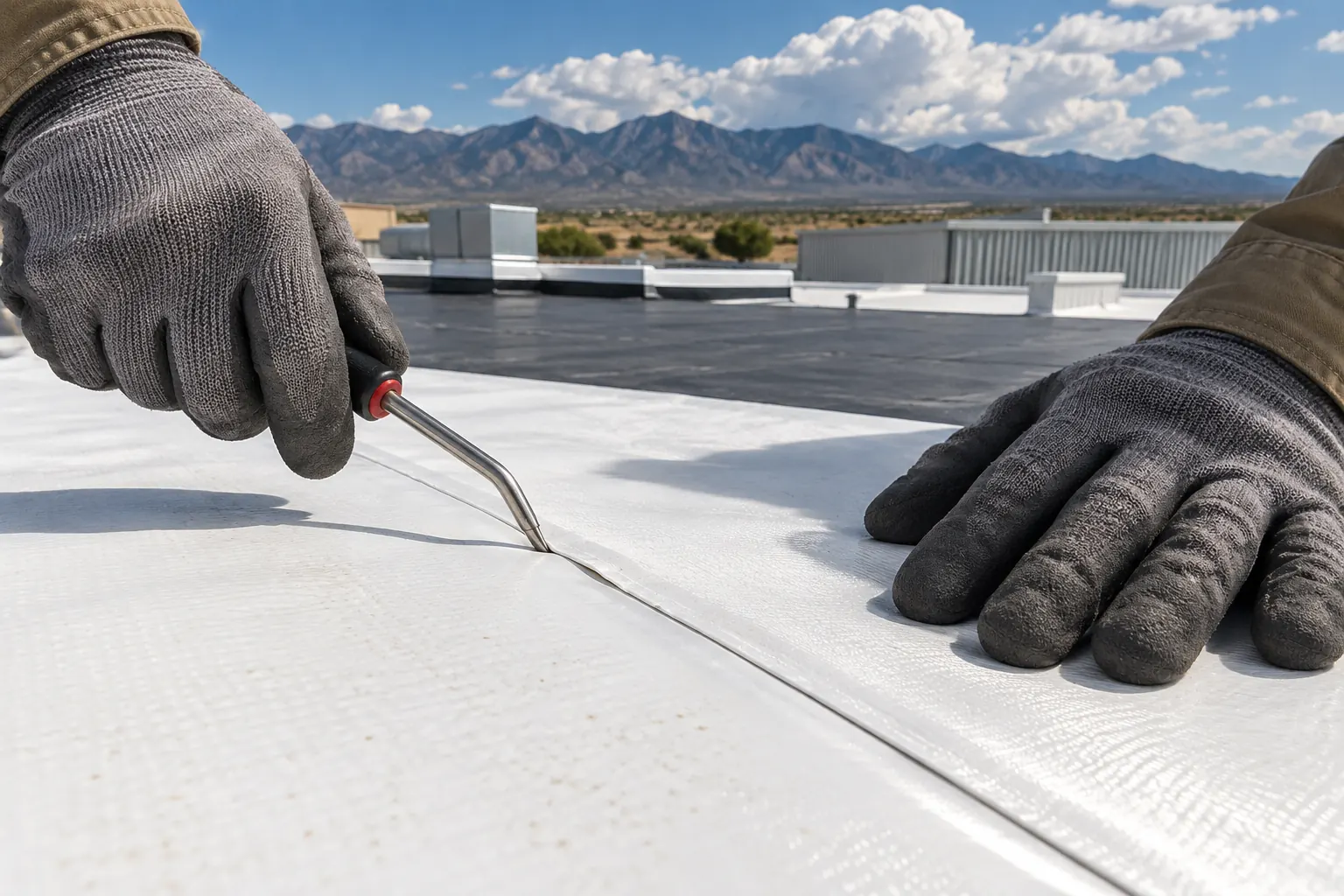
Seam probe drawn along a fresh white TPO weld

TPO Roofing

A white single-ply sheet with hot-air welded seams, laid over new insulation on flat and low-slope roofs that carry rooftop cooling units.

Best For

  • Clinics and offices that cool most of the year
  • Large, open retail roofs

Check First

  • Wet insulation under the old roof
  • Foot traffic paths to units
TPO roof installation and repair
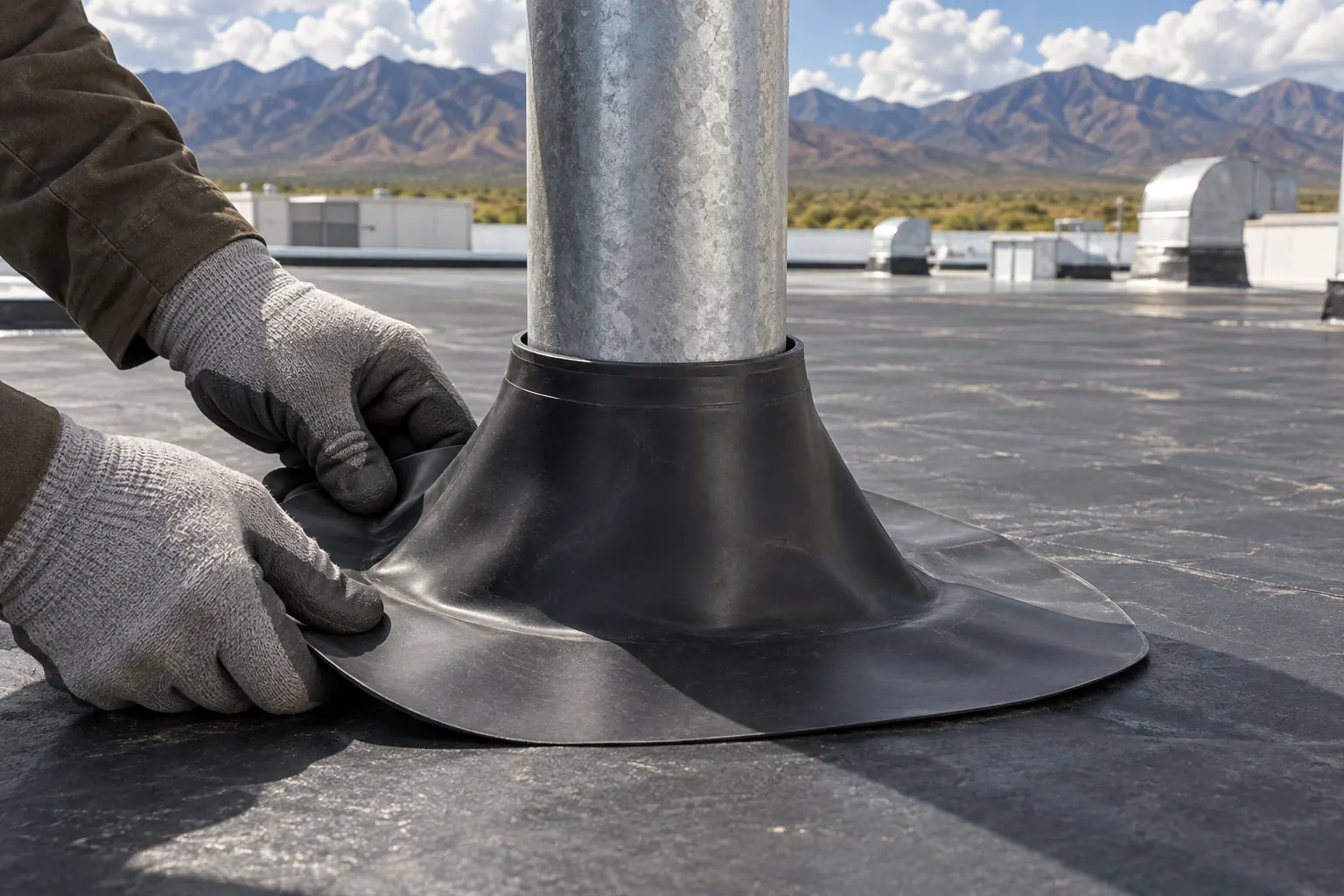
Gloved hands fitting a molded boot around a vent pipe on an EPDM roof

EPDM Roofing

Synthetic rubber sheet with taped or adhered laps. It flexes through cold nights and patches cleanly, which suits older buildings already wearing rubber.

Best For

  • Buildings with an existing EPDM roof
  • Roofs crowded with pipes and vents

Check First

  • Seam adhesion on the old sheet
  • Heat gain over cooled rooms
EPDM roofing for older buildings
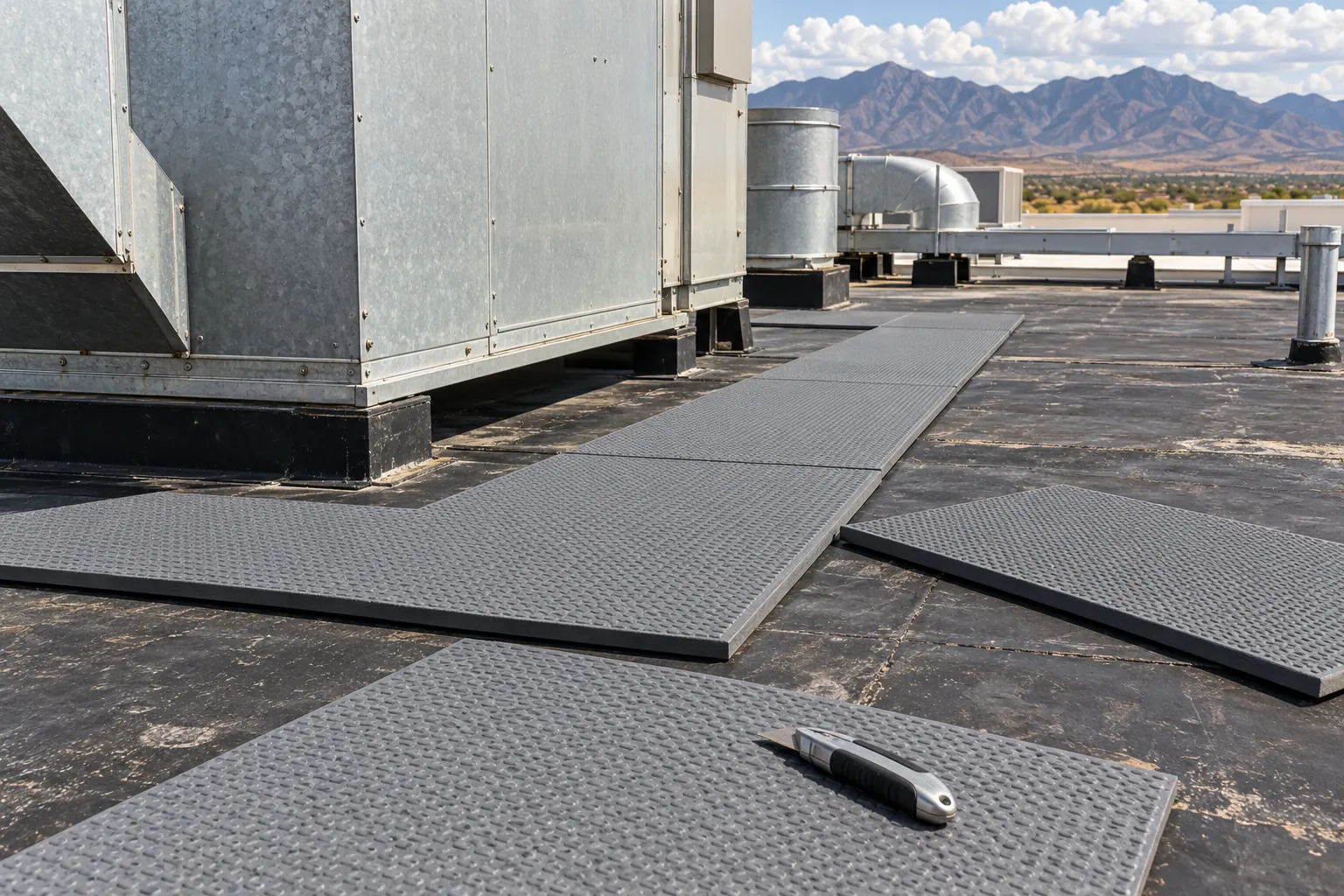
Gray walkway pads laid between rooftop units on an industrial membrane roof

Industrial Roofing

Membrane or metal roofs built for exhaust stacks, heavy units, and daily service traffic, with reinforced flashings and walkway pads around the equipment.

Best For

  • Shops, plants, and maintenance buildings
  • Roofs with process exhaust

Check First

  • Chemical exposure at stacks
  • Ponding across wide spans
Industrial roofing for plants and shops
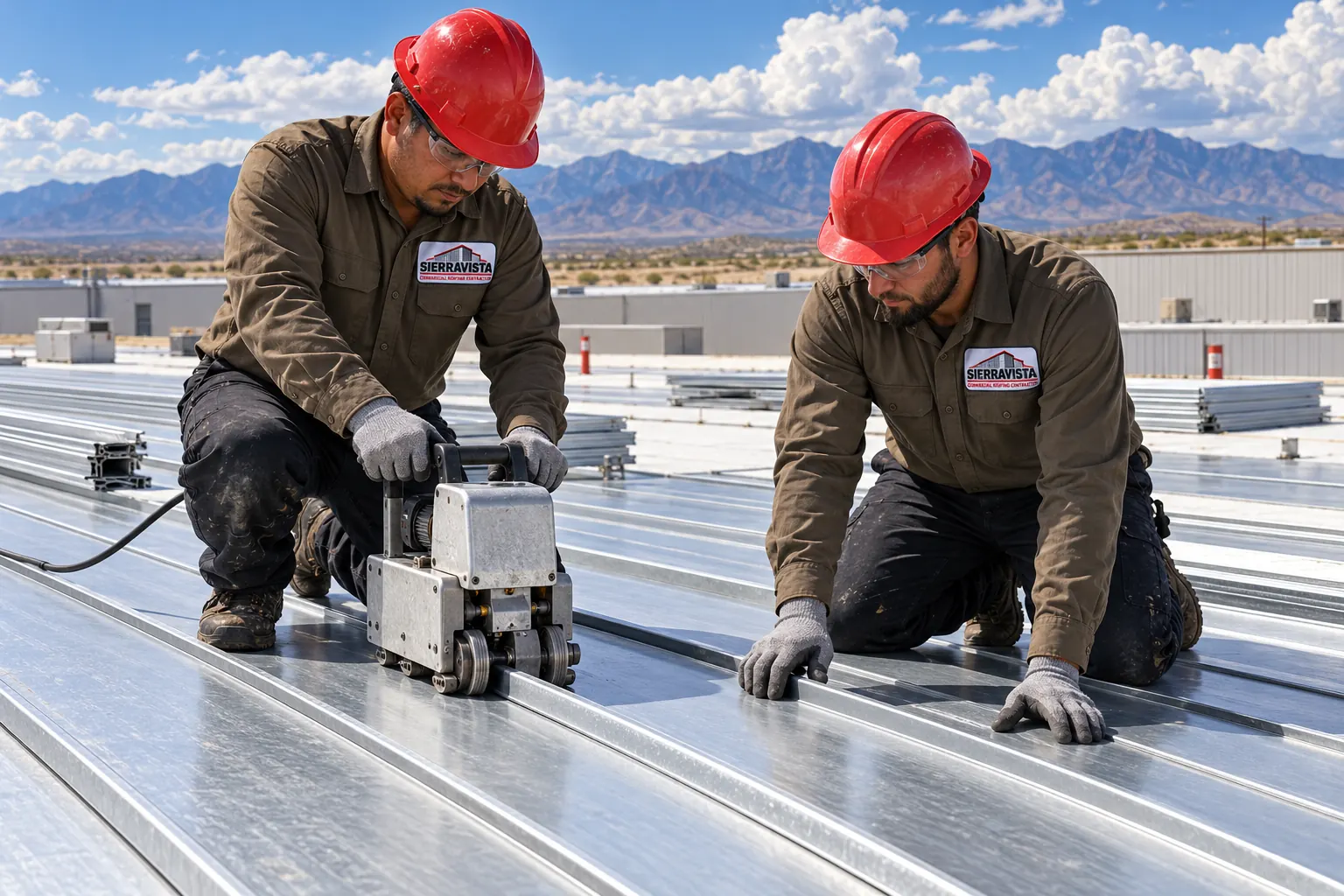
Two roofers closing standing-seam metal panels with an electric seamer

Commercial Metal Roofing

Standing-seam panels for new metal roofs, plus fastener, lap, and retrofit work on older screwed steel buildings across Cochise County.

Best For

  • Warehouses and pre-engineered steel
  • Owners holding a building for decades

Check First

  • Rust at panel laps
  • Purlin spacing for retrofits
Commercial metal roofs and retrofits

Which System Fits Which Roof

Five questions about the roof narrow the choice faster than comparing product names.

QuestionTPOEPDMIndustrialMetal
How steep is the roof?Flat to low slopeFlat to low slopeEither, by buildingSloped, or low slope with standing seam
How are seams closed?Hot-air weldedTaped or adheredReinforced at every curbSeamed or screwed laps
How much foot traffic?Light, with pads at unitsLight to moderateHeavy, with walkway pathsLight; walk the seams
Hail and sun at altitude?60 or 80 mil sheetWhite-topped sheet over cooled spaceThicker sheet near equipmentReflective factory finish
Recover or tear off?Recover over dry roofsTie into dry EPDMTear off wet sectionsRetrofit framing over old roofs

Every row assumes an inspection first. Wet insulation or a damaged deck changes the answer for any system.

Not Sure Which System You Have?

Send a photo from the roof hatch or a note about where it leaks. We can usually tell membrane from metal at a glance and plan the inspection from there.

What To Have Ready

  • A photo of the roof surface
  • Approximate roof area
  • Where water shows up inside
  • How many rooftop units sit up there

From First Look To Final Seam

The system changes, but the order of work stays the same on every commercial roof we take on.

  1. On The Roof

    Step 1: Inspect Your Roof

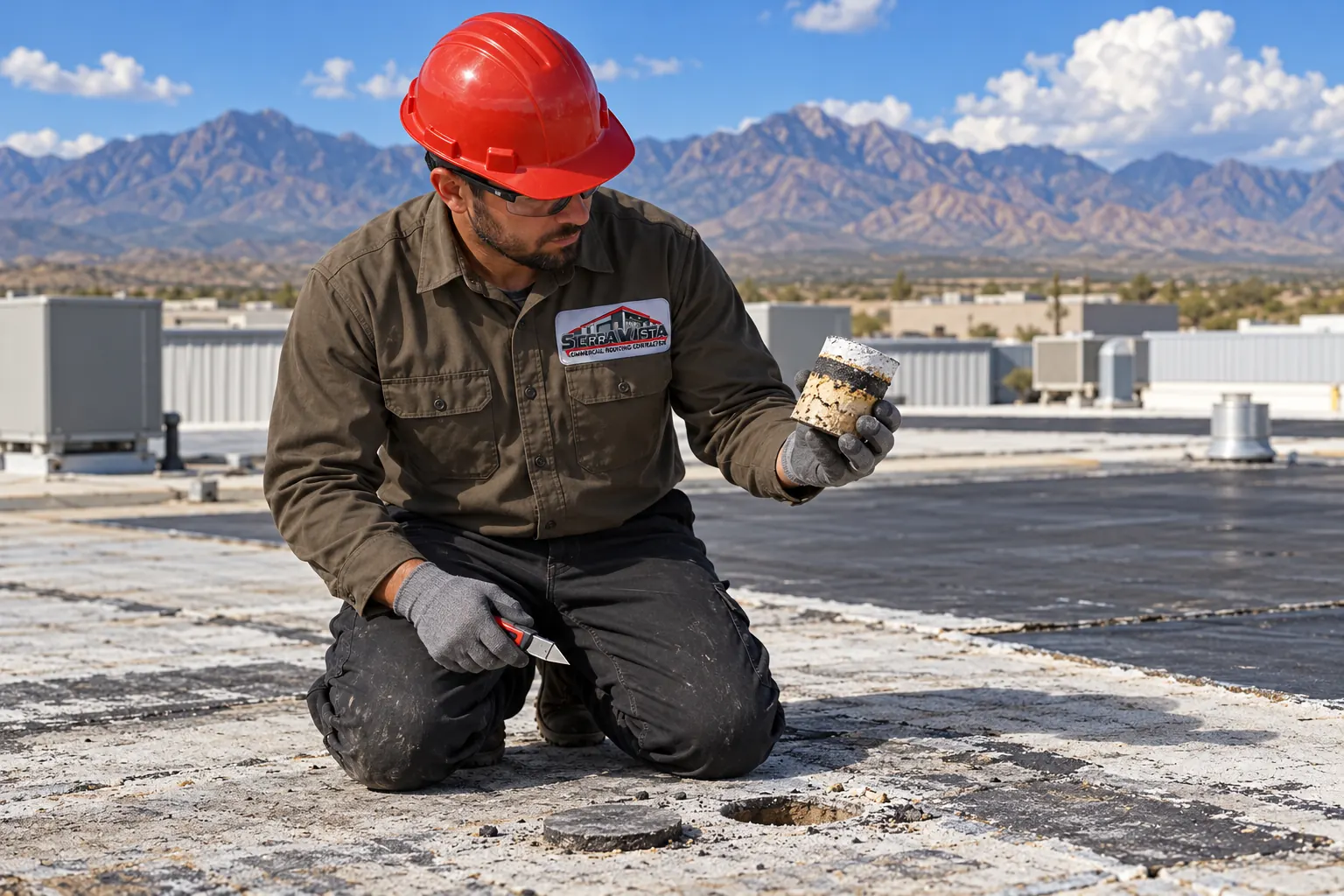
    Field, laps, flashings, edges, and drains get a close look, and soft areas get a core cut. That tells us what the roof is made of and how wet it is.

    Roofer kneeling with a core sample cut from an aged flat roof
  2. Paperwork

    Step 2: Match The System To The Building

    Slope, use, rooftop equipment, and how long you plan to hold the property point to TPO, EPDM, a reinforced industrial build-up, or metal.

  3. At The Building

    Step 3: Plan Access And Staging

    Ladder points, crane spots, and material drop zones are set away from entrances and loading doors so the building keeps working below the roof.

  4. On The Roof

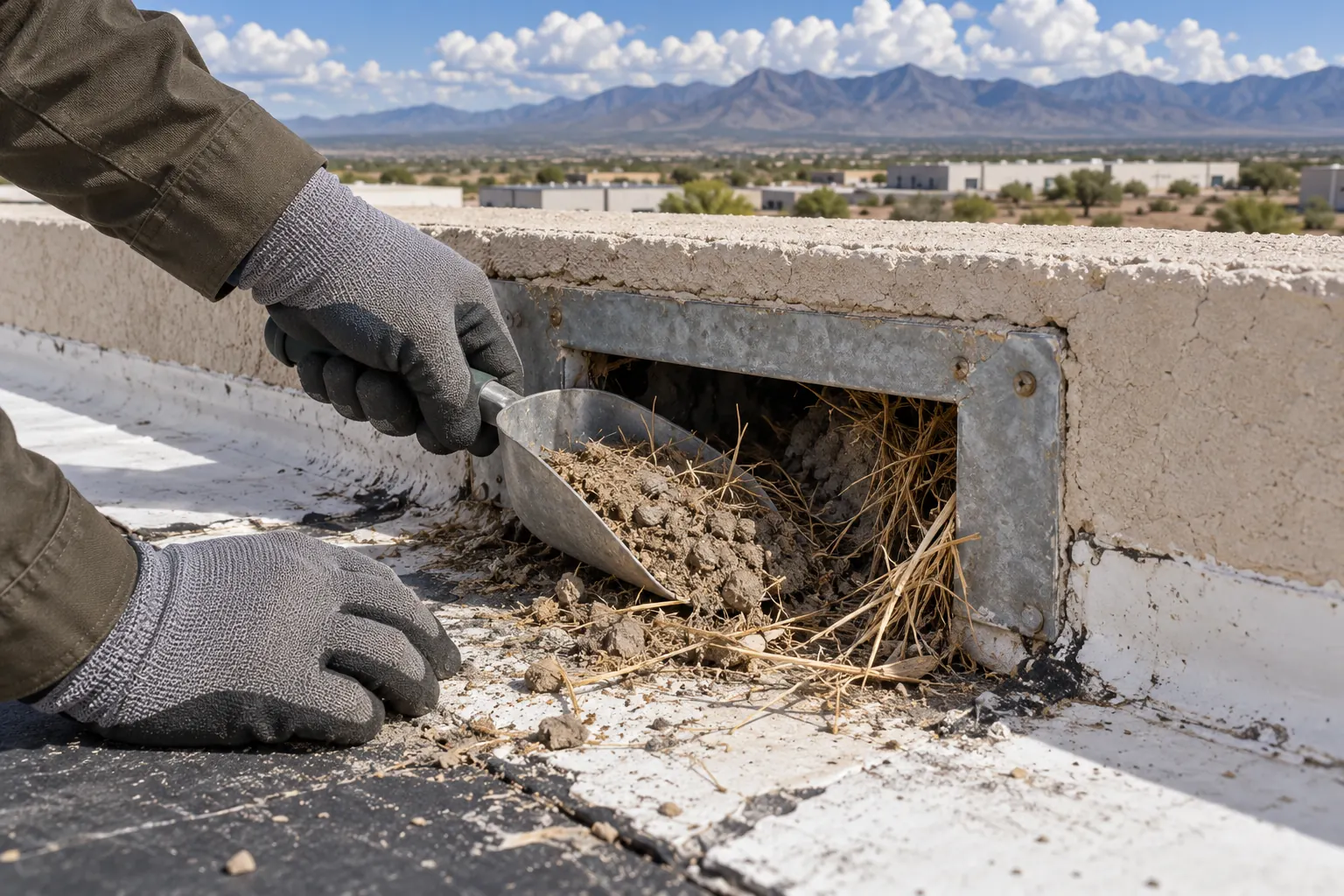
    Step 4: Clear Drains And Prep The Deck

    Debris comes out of drains and scuppers, wet insulation is cut out, and damaged deck is repaired before any new membrane or panel goes down.

    Gloved hands scooping dust and dry grass out of a roof scupper
  5. Paperwork

    Step 5: Probe, Photograph, And Hand Over

    Finished seams are probed or checked by hand, and every flashing gets photographed. Those photos become your record for future maintenance and budgets.

Choosing Among Commercial Roofing Services

Which roof system suits which kind of building here?

Slope, use, and how long you plan to keep the building decide it. Flat-roofed medical and professional offices usually fit TPO, older retail with an existing rubber roof fits EPDM, and warehouses or pre-engineered steel fit standing-seam metal.

Shops with heavy rooftop equipment do best with reinforced TPO or EPDM plus walkways. Tombstone's historic district adds its own review. An on-roof inspection confirms the choice.

How long should each system last in southern Arizona?

With good installation and routine care, TPO often runs about 20 to 30 years, EPDM roughly 25 to 30, and commercial metal 40 years or more. Hail, thin membrane, ponding, unprotected black rubber, loose fasteners, and rust at laps shorten those numbers. Manufacturer terms and site conditions set what any one roof delivers.

Do you repair roofs or only replace them?

Both, and repair comes first whenever the roof supports it. Split seams, failed flashings at curbs, loose edge metal, punctures, and backed-out fasteners are all repair work. Replacement makes sense when leaks keep moving around the roof or a core cut finds wet insulation across large areas.

Can one building carry two different roof systems?

Yes, and plenty of buildings here do. A sloped metal warehouse with a flat office section in front is a common pairing. The key detail is the transition where the two roofs meet, which needs its own flashing and gets extra attention at every inspection.

Do our rooftop units have to be shut off?

Most stay in place on their curbs. New membrane is flashed up each curb, and units are shut down only for the hour their flashing needs. When a curb is too short for proper flashing height, we plan with your mechanical contractor to raise it before the new roof goes on.

Can a large roof be replaced one section at a time?

Often, yes. Large roofs can be split at expansion joints or curb lines and replaced over several stages, each sealed before the crew leaves. Phasing keeps more of the building dry and in use, and it lets you spread the work across budget periods when the roof condition allows.

Start With An Inspection Of Your Roof

Tell us the building type and where it leaks. We will look at the roof and recommend the system that fits it.

Call UsGet A Free Estimate