Rubber Membrane Roofs

Sierra Vista EPDM Roofing Contractor

We install, replace, and repair EPDM rubber roofs on older Sierra Vista retail and office buildings. As an EPDM roofing contractor, we start by checking the existing sheet and insulation.

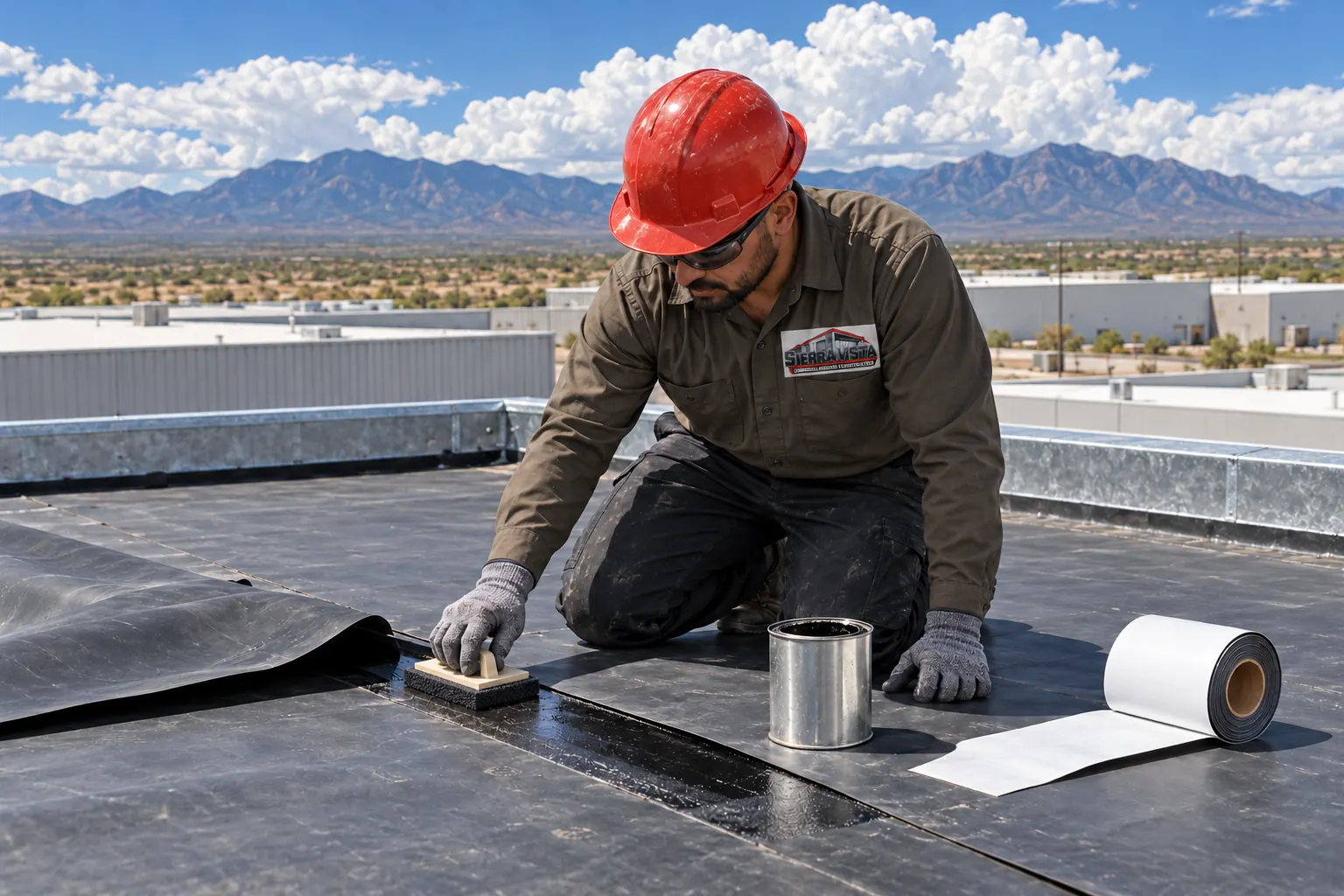
Roofer scrubbing primer onto a black EPDM lap before taping it in Sierra Vista, AZ

How We Work

  • Black or white-topped sheet
  • Taped and adhered lap seams
  • Stays flexible on freezing nights
  • New boots at every penetration

Is Your Roof Ready For EPDM?

EPDM fits low-slope roofs, especially ones that already have rubber on them. The second column covers what has to change first.

EPDM Makes Sense When

  • Existing EPDM roof with dry insulation underneath
  • Older retail or office building with an irregular roof shape
  • Roofs crowded with pipes, vents, and small curbs
  • Owners who want repairs maintenance staff can monitor
  • Buildings that see wide day-to-night temperature swings

Sort These Out Before EPDM

  • Saturated insulation found in the core cuts
  • Seams that have lost adhesion along long runs
  • Black sheet over space that runs cooling all day
  • Heavy process exhaust or grease vents on the roof
  • Sloped roof sections that call for metal panels

Where Older EPDM Roofs Fail

Rubber roofs age in predictable places. These six conditions account for most of the EPDM leaks we trace.

Age

Lap Seams Peeling Back

You See
Seam edges curling up, with old tape or adhesive visible underneath.
What It Means
Older EPDM seams relied on adhesives that dry out over decades. Once a lap opens, water runs along it into the insulation, so failing seams get cleaned and re-taped.
Sun

Shrinking Sheet Pulling At Edges

You See
Membrane pulled tight at walls and curbs, bridging corners instead of lying flat.
What It Means
Rubber sheet shrinks with age and sun exposure. The pull stresses flashing at parapets and curbs, where it tears first.
Freeze

Cracked Flashing At Parapets

You See
Brittle or split flashing where the roof turns up the wall.
What It Means
Winter freeze-thaw swings flex the flashing at every wall joint. New flashing and termination bar keep water from running behind the sheet.
Equipment

Loose Pipe Boots And Vents

You See
Boots split at the collar, gaps around vent stacks and conduit.
What It Means
Penetrations are the most common EPDM leak point. Each one gets a new molded boot or field-wrapped flashing during repair or replacement.
Monsoon

Ponding Over Low Spots

You See
Shallow water and dirt rings in the field after summer storms.
What It Means
Standing water does slow damage to any seam in its path. Low spots usually trace back to deck sag or crushed insulation found during the core cut.
Wind

Ballast Or Sheet Moving In Wind

You See
Bare spots in the ballast, or membrane lifting near roof corners.
What It Means
Loose-laid and ballasted EPDM relies on weight to stay down. Strong spring gusts shift ballast and leave corners open to uplift.

EPDM Options For Sierra Vista Roofs

EPDM work runs from a single boot repair to a full new roof. Moisture readings decide which option makes sense.

OptionWhen It FitsWhat It Involves
Seam and flashing repairDry insulation with open laps or failed flashingLaps cleaned, primed, and re-taped; new flashing at walls and curbs
Section tied into existing EPDMOne wet area on an otherwise dry rubber roofWet area cut out, insulation replaced, new sheet spliced into the old
Full tear-off and new EPDMWidespread wet insulation or repeat leaksOld roof removed, deck repaired, new insulation and fully adhered sheet
White-topped EPDMCooled offices and clinics under the roofReflective top surface in place of standard black
Reflective coating on EPDMDry, well-adhered black sheet with surface wearSheet cleaned and primed, then a reflective coating applied

Before And After A New EPDM Roof

Owners of older rubber roofs notice these differences after replacement or a full seam and flashing repair.

With Aging Rubber

  • Laps lifting at the edges of every seam
  • Flashing pulled tight and split at the walls
  • Split pipe boots leaking into offices below
  • Mismatched tape patches across the field
  • Black surface heating the rooms below

With New Or Restored EPDM

  • Primed, taped laps that lie flat
  • Fresh flashing and termination bar at the walls
  • Molded boots on every pipe and vent
  • One continuous sheet across repaired areas
  • White-topped sheet where cooling matters

Rubber Roof Leaking At The Seams?

Open laps and split pipe boots are the usual EPDM leak points, and both can often be repaired. Tell us where the stains are and how old the roof is.

What To Have Ready

  • Photos of ceiling stains
  • Approximate age of the roof
  • Rough roof size
  • Number of pipes and vents

How EPDM Work Is Done

Repair or replacement, every EPDM job runs through the same five steps.

  1. On The Roof

    Step 1: Inspect Your Roof

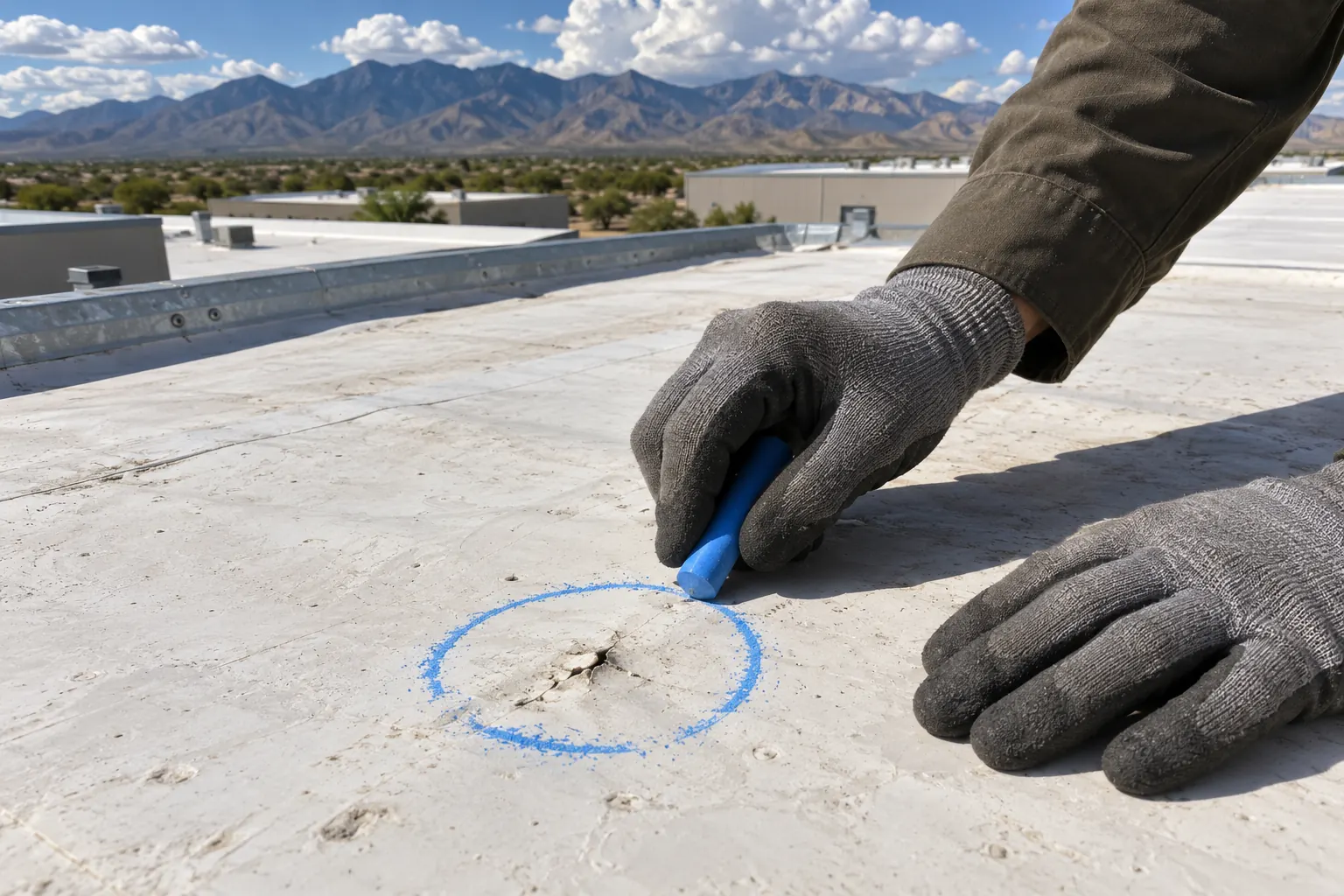
    Every lap, boot, and wall flashing gets checked, and storm damage is marked on the sheet. A core cut tells us whether the insulation under the rubber is still dry.

    Chalk circle marking storm damage on a roof membrane
  2. Paperwork

    Step 2: Decide Repair, Section, Or Full Roof

    Moisture readings set the scope. Dry roofs get seam and flashing repairs, one wet area gets a spliced section, and widespread water means a full replacement.

  3. On The Roof

    Step 3: Prep The Old Sheet

    Old EPDM has to be scrubbed and primed before new tape will bond. That step is what makes a repaired lap last instead of peeling back after one summer.

  4. On The Roof

    Step 4: Tape Laps And Flash Pipes

    New seam tape is rolled into primed laps, and each pipe and vent gets a molded boot or wrapped flashing. Wall flashing is tied off under a termination bar.

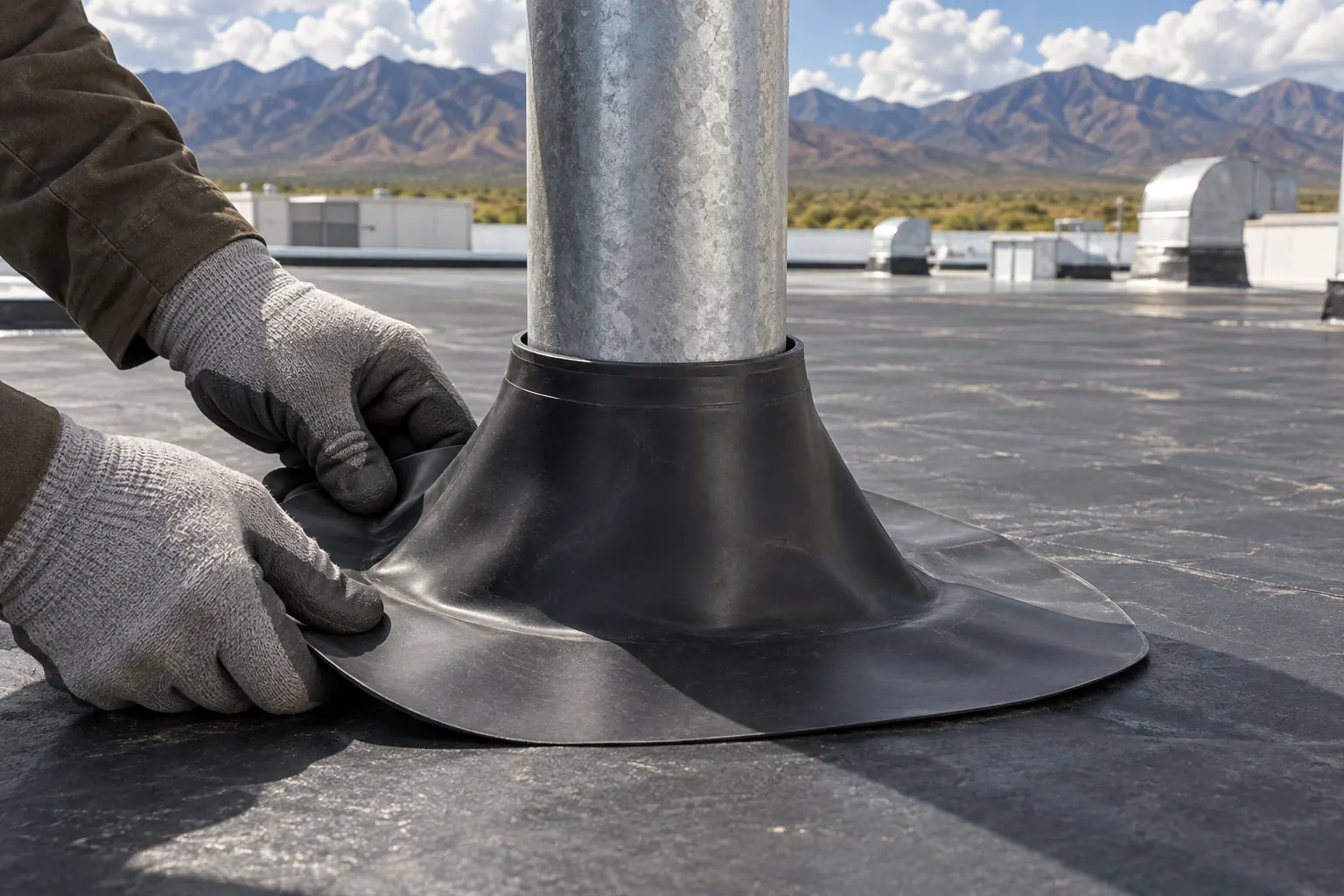
    Molded EPDM pipe boot pressed down around a vent pipe
  5. At The Building

    Step 5: Walk The Roof With You

    Repairs and new sheet are checked lap by lap before we leave. You get photos of each repaired seam and penetration for your maintenance file.

Other Systems To Compare

Two other roof systems come up often when an EPDM roof is nearing replacement.

Questions For A Sierra Vista EPDM Roofing Contractor

When does EPDM make more sense than TPO here?

EPDM wins when the building already has a rubber roof over dry insulation, or when the roof needs a sheet that stays pliable through cold-night swings. Its long track record and simple patching are why it shows up on so many older Sierra Vista buildings.

Black EPDM does absorb heat, so over cooled space we talk through white-topped EPDM or a reflective coating during the inspection.

Can a 20-year-old EPDM roof still be patched?

Usually, if the sheet is still flexible and dry underneath. Old rubber has to be scrubbed and primed so new tape bonds, and a patch is only as good as that prep. Brittle, shrunken sheet that tears when pulled is past patching and points toward replacement.

Should we choose black or white EPDM?

It comes down to what sits under the roof. Black EPDM absorbs heat, which matters over offices and clinics that cool all day. White-topped sheet reflects more sun at this elevation, while black remains common over storage and unconditioned space.

Why do EPDM roofs leak around pipes?

Pipe boots and vent flashing take the most movement on a rubber roof. Sun and freeze-thaw cycles split the boot collar, and the clamp at the top loosens. Replacing the boot with a new molded piece fixes most of these leaks without touching the rest of the roof.

Can new EPDM be tied into our existing roof?

Yes, when the existing sheet is dry and still bonds. The wet area is cut out, the insulation replaced, and new EPDM is spliced in with primed tape. A core cut on the neighboring sheet confirms it is worth tying into before work starts.

What sets the cost of EPDM work?

Scope sets cost more than the sheet. How many laps need re-taping, the number of pipes and curbs to flash, how much insulation is wet, and whether the old roof comes off all change the total. A ballpark estimate gives a range before the inspection firms up the scope.

Have An Older Rubber Roof?

Call or send a few details. We will check the laps, boots, and insulation and tell you whether repair or a new EPDM roof makes sense.

Call UsGet A Free Estimate