Plants, Shops, And Warehouses

Sierra Vista Industrial Roofing Contractor

We install, replace, and repair roofs on shops, plants, and storage buildings near Highway 90. An industrial roofing contractor in Sierra Vista starts with every stack, curb, and drain.

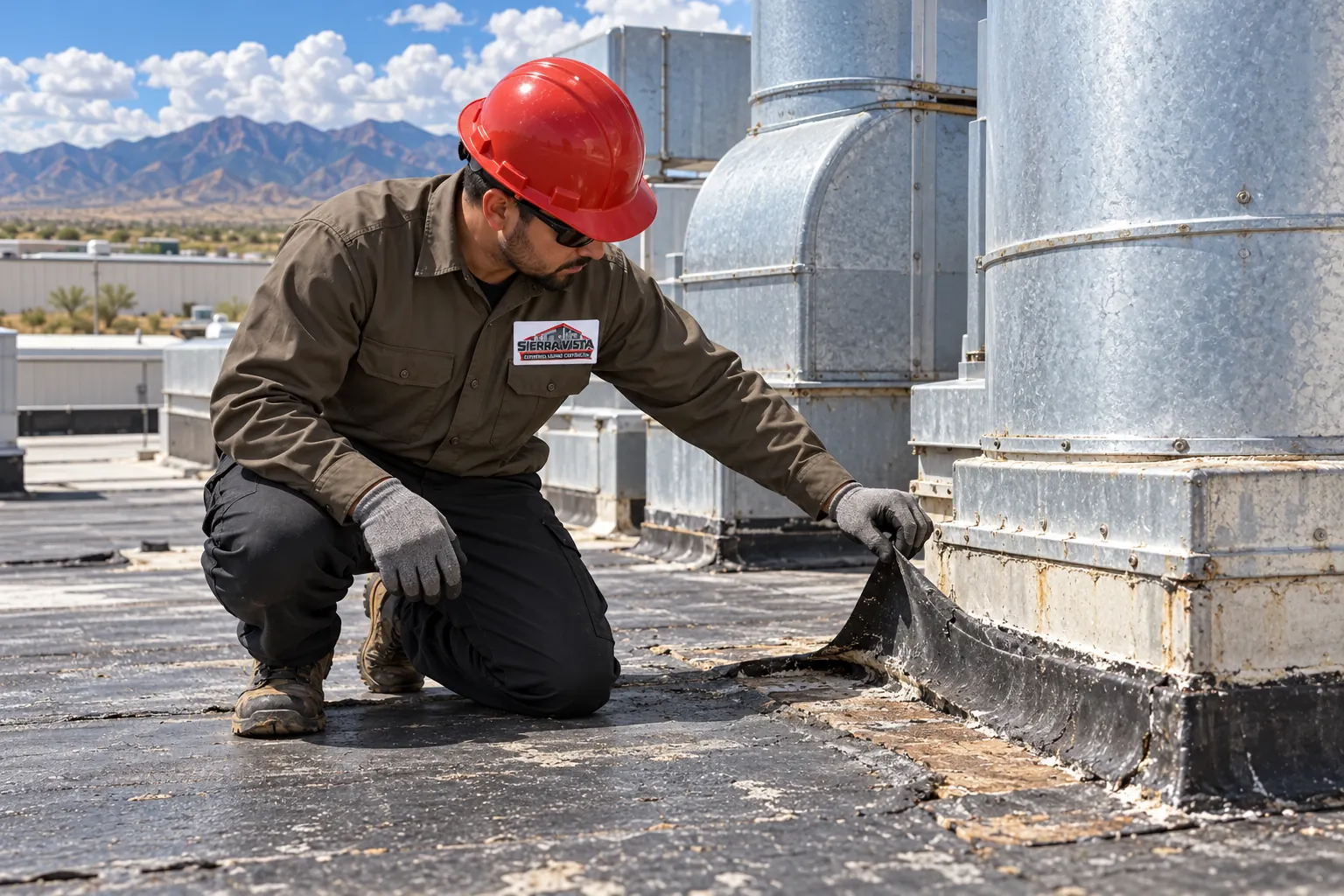
Roofer lifting failed flashing at the base of process ducts on an industrial roof in Sierra Vista, AZ

How We Work

  • Reinforced flashing at stacks
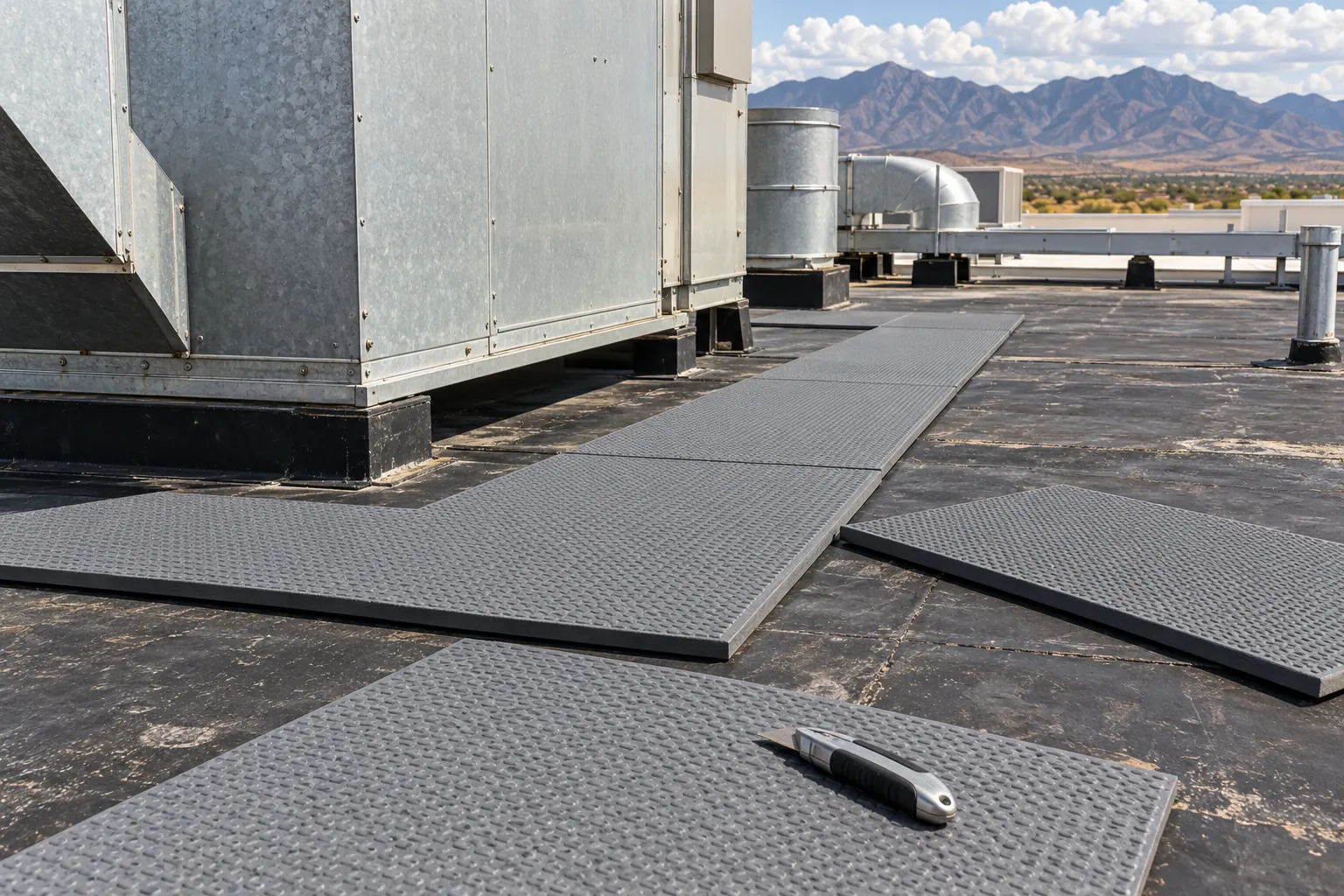
  • Walkway pads on service paths
  • Crickets and taper to drains
  • Sections phased around production

Is Your Roof Ready For An Industrial System?

Industrial roofs carry equipment, exhaust, and foot traffic that office roofs rarely see. Here is what fits and what gets addressed first.

Industrial Work Makes Sense When

  • Warehouses, maintenance shops, and storage buildings
  • Roofs with heavy HVAC units or process exhaust
  • Plants where techs cross the roof every week
  • Older steel buildings due for panel repair or retrofit
  • Low-slope roofs with water collecting between drains

Sort These Out Before The Reroof

  • Chemical exhaust attacking the current membrane
  • Equipment curbs too short to flash properly
  • Deck damage under heavy rooftop units
  • Structural questions about added weight or retrofit framing
  • Work on post at Fort Huachuca, which follows federal contracting rules

Industrial Roof Conditions We Find

Equipment, traffic, and wide roof bays create problems a small office roof never faces. These six show up most on local plants and shops.

Equipment

Damaged Membrane Near Exhaust Stacks

You See
Discolored, soft, or blistered sheet downwind of process exhaust.
What It Means
Some exhaust residue breaks down roofing membranes over time. Reinforced flashing and a compatible membrane at the stack keep the damage from spreading.
Foot Traffic

Worn Paths To Rooftop Equipment

You See
Scuffed, punctured sheet along the routes techs walk every week.
What It Means
Repeated traffic cuts and wears the membrane along the same lines. Walkway pads spread the load and show service workers where to step.
Equipment

Short Or Rusted Equipment Curbs

You See
Low curbs, rust at curb corners, flashing that barely reaches the unit.
What It Means
Curbs set too low leave flashing short of where water rises during storms. Raising or rebuilding them during a reroof fixes the detail before new membrane goes on.
Monsoon

Ponding Across Wide Roof Bays

You See
Long stretches of standing water across large bays after storms.
What It Means
Big industrial roofs often have few drains for their size. Crickets and tapered insulation steer water toward the drains instead of letting it sit.
Age

Loose Panels On Older Steel Buildings

You See
Backed-out screws, rust at panel laps, and leaks along the ridge.
What It Means
Steel buildings flex with heat and cold every day. Fasteners loosen, washers dry out, and laps open, so re-fastening or a retrofit comes up at inspection.
Wind

Lifted Coping On Long Parapets

You See
Coping joints opened up and loose cleats along long parapet runs.
What It Means
Long parapets catch spring wind across a big roof. Loose coping lets water into the wall and gives wind a grip on the roof edge.

Industrial Options For Sierra Vista Roofs

Industrial roof work usually combines a membrane or metal system with reinforcement where equipment and traffic concentrate.

OptionWhen It FitsWhat It Involves
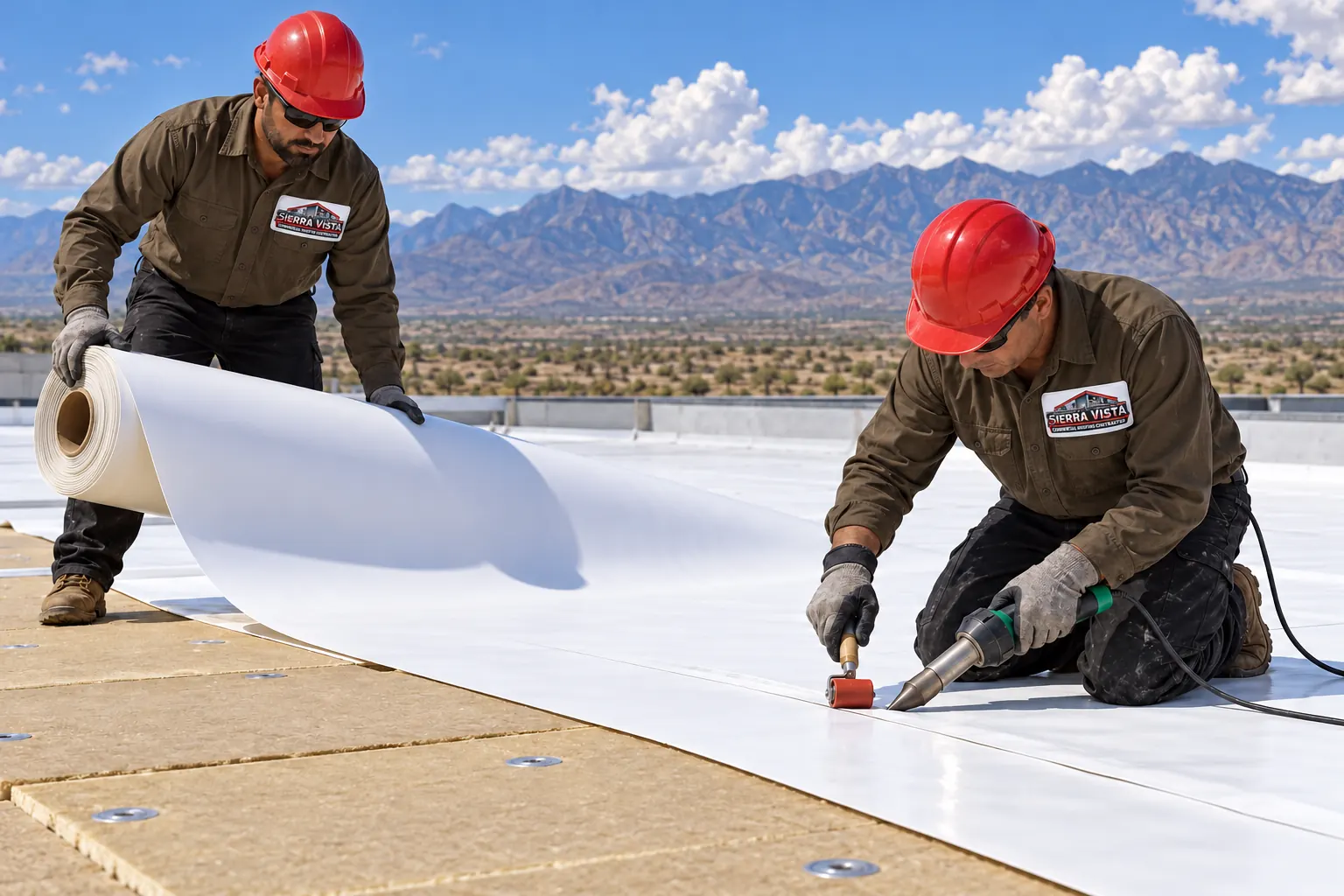
Reinforced TPO or EPDM replacementLow-slope roofs with heavy equipment and many penetrationsNew membrane with reinforced flashing at stacks and curbs
Walkway and curb upgradesDry roof with traffic wear and short curbsWalkway pads on service paths and rebuilt curb flashing
Tapered insulation and cricketsPonding across wide bays between drainsTaper installed under the new membrane to move water
Metal panel repair and re-fasteningOlder steel buildings with loose screws and lap leaksOversized fasteners, new washers, and butyl tape at the laps
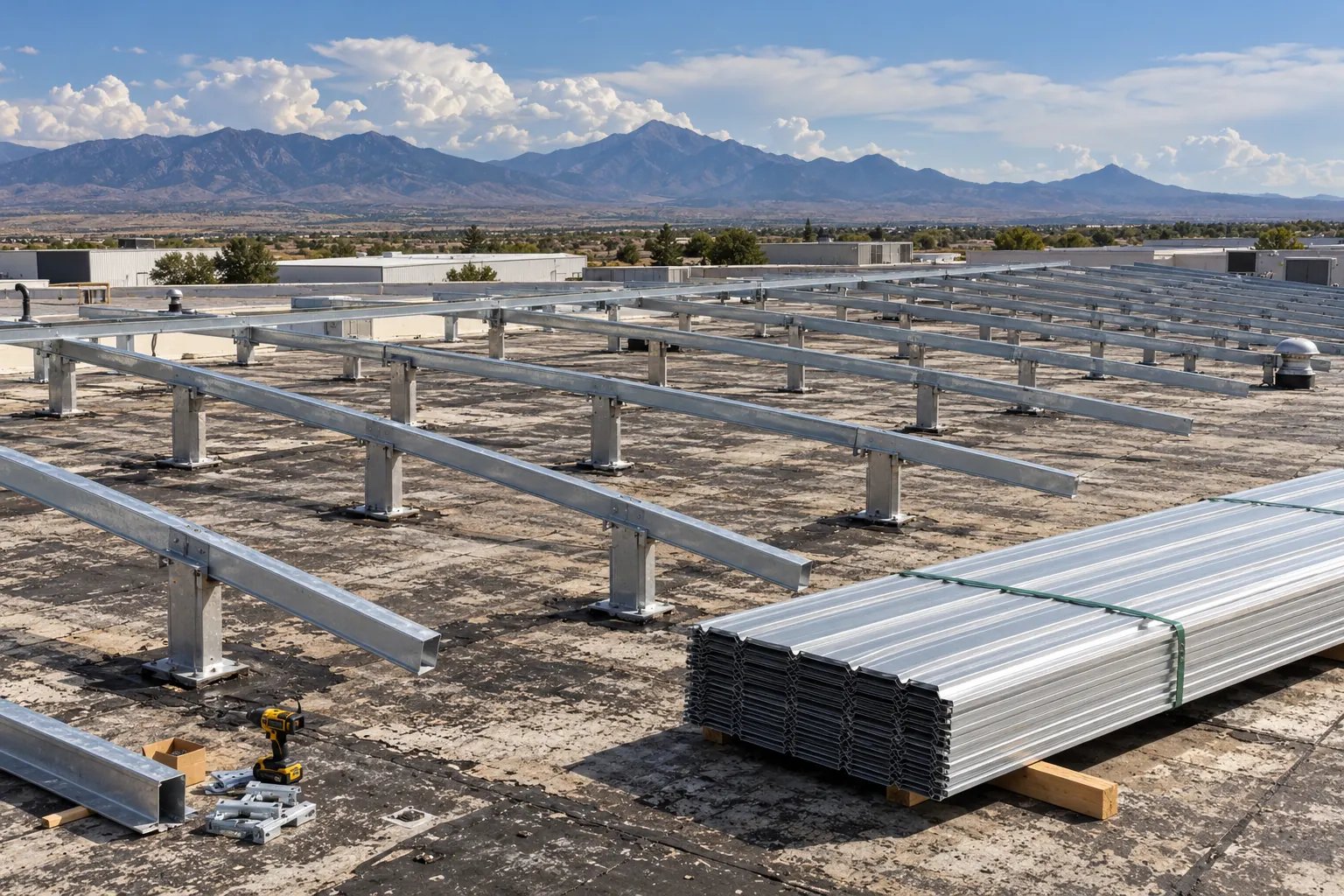
Metal retrofit systemWorn steel or flat roofs on buildings staying in serviceNew framing and panels installed over the existing roof

Before And After A New Industrial Roof

Plant and shop managers tend to see these changes once the roof is rebuilt around the equipment on it.

Before The Work

  • Leaks traced to the same exhaust stack each season
  • Techs stepping wherever is closest to the unit
  • Water sitting across big bays after storms
  • Rust and loose screws along steel panel laps
  • Coping joints letting water into parapet walls

After The Work

  • Reinforced flashing at every stack and curb
  • Marked walkway paths between units
  • Crickets moving water to the drains
  • Re-fastened or retrofitted metal panels
  • Coping and cleats secured along every parapet

Leak Near Your Rooftop Equipment?

Most industrial roof leaks start at a curb, a stack, or the path to it. List the equipment up top and the spots where drips land on the floor below.

What To Have Ready

  • Number and type of rooftop units
  • Any process exhaust or vents
  • Production hours and shutdown windows
  • Photos of interior leaks

How Industrial Roof Work Is Phased

Industrial roofs are reworked in sections so production keeps running. These five steps set the order.

  1. On The Roof

    Step 1: Inspect Your Roof

    Every stack, curb, walkway, and drain is checked, and the membrane near exhaust is tested for damage. Core cuts across the bays show where insulation is wet.

  2. Paperwork

    Step 2: Map Sections Around Production

    The roof is split into work areas that line up with what runs below. Hot work and noisy tear-off land in the shutdown windows you set.

  3. On The Roof

    Step 3: Tear Off By Production Zone

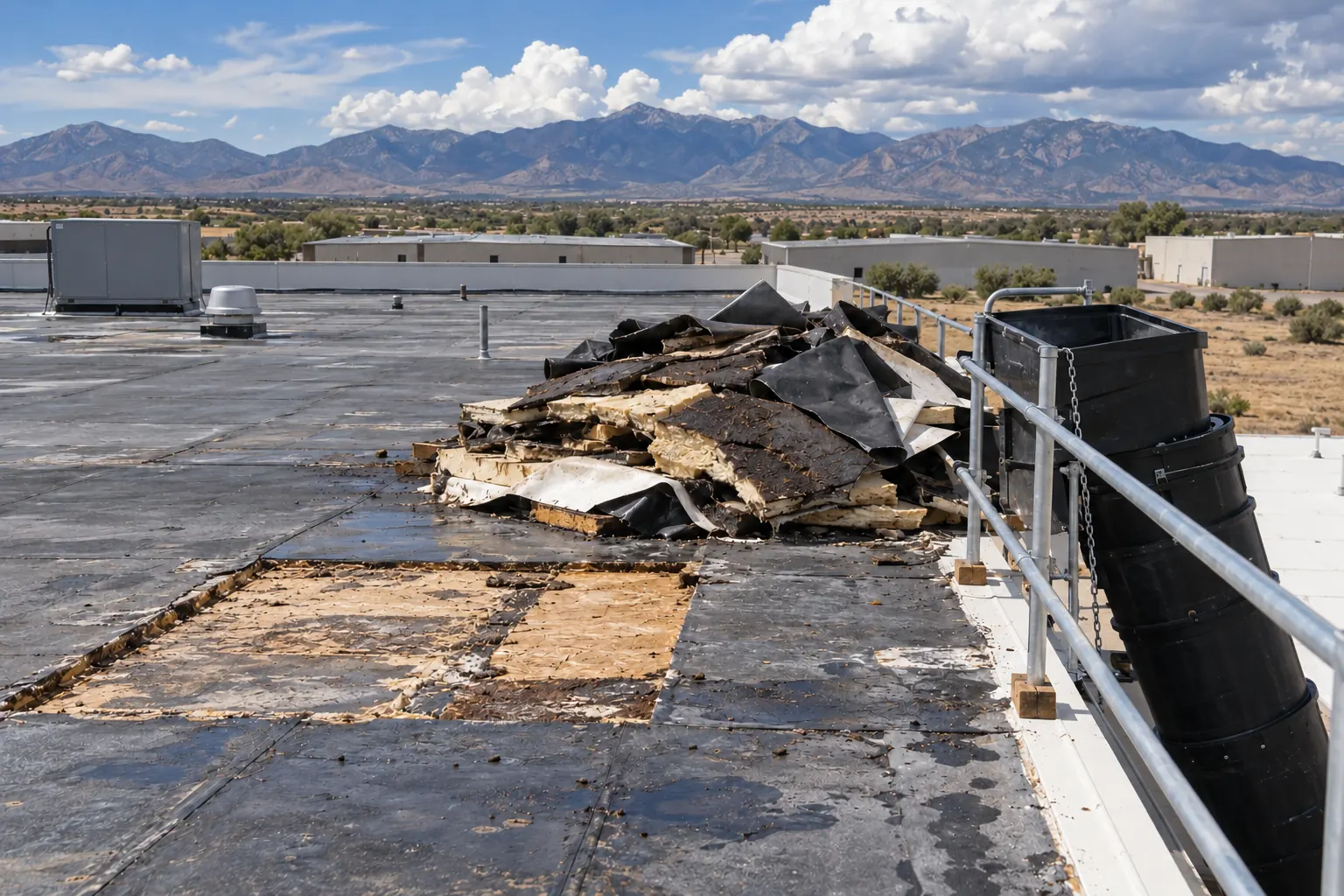
    Only the day's area is torn off, and wet insulation is lowered by chute. Each section is dried in with new membrane before the shift ends.

    Torn-off roofing and wet insulation piled beside a debris chute at the roof edge
  4. On The Roof

    Step 4: Reinforce Curbs And Stacks

    Curbs are raised where needed, stacks get reinforced flashing, and taper is set toward the drains before the new membrane goes down.

  5. At The Building

    Step 5: Lay Walkways And Hand Over

    Walkway pads go down on service paths, and you get photos of every curb, stack, and seam for the maintenance file.

    New walkway pads laid around rooftop equipment on a plant roof

Related Services For Industrial Buildings

Many industrial properties need one of these systems on part of the roof.

Questions For A Sierra Vista Industrial Roofing Contractor

Do you handle industrial roofing near Fort Huachuca and the Highway 90 corridor?

Yes, on warehouses, maintenance shops, storage buildings, and facilities with heavy rooftop equipment or process exhaust. These roofs carry more penetrations, foot traffic, and chemical exposure than an office roof, so membranes are reinforced at stacks and curbs, walkway pads go down, and crickets move water to the drains.

Work on the installation itself follows separate federal contracting and access rules.

Can the roof be replaced while production keeps running?

It can, by working one section at a time. Tear-off, crane lifts, and hot work are scheduled around the shutdown windows and shift changes you set, and fresh-air intakes near the work are coordinated with your maintenance staff. Each open section is sealed before the day ends.

What do we do about membrane damage near exhaust stacks?

Find out what the exhaust carries first. Some residues break down certain membranes, so the fix may be a different membrane around the stack, reinforced flashing, or a raised curb that keeps residue off the field sheet. We read the damage pattern during the inspection.

Are walkway pads worth adding?

On roofs that service techs cross often, yes. Pads spread foot traffic, protect the membrane along the routes to HVAC units and exhaust fans, and show visitors where to step. They are a small part of the job compared with repairing punctures along the same path every year.

Should an older steel building get re-fastened or retrofitted?

The condition of the panels decides it. Solid steel with surface rust at the laps can keep going with oversized fasteners, new washers, and butyl tape. Panels rusted through, or a roof that leaks at every lap, point toward a retrofit system over the old roof.

What drives the cost of an industrial reroof?

Equipment and access move the number more than square footage. The count of curbs and stacks, crane lifts, phasing around production, wet insulation, and tapered insulation for drainage all change the total. A ballpark estimate gives a starting range, and the inspection sets the scope.

Need A Roof That Holds Up To Your Equipment?

Tell us what sits on your roof and how the building runs. We will inspect it and lay out a phased plan.

Call UsGet A Free Estimate