Rail And I-10 Buildings

Benson Commercial Roofing Contractor

Benson commercial roofing contractor for warehouses, shops, and rail-served buildings along I-10, with roof work planned around loading docks and truck schedules.

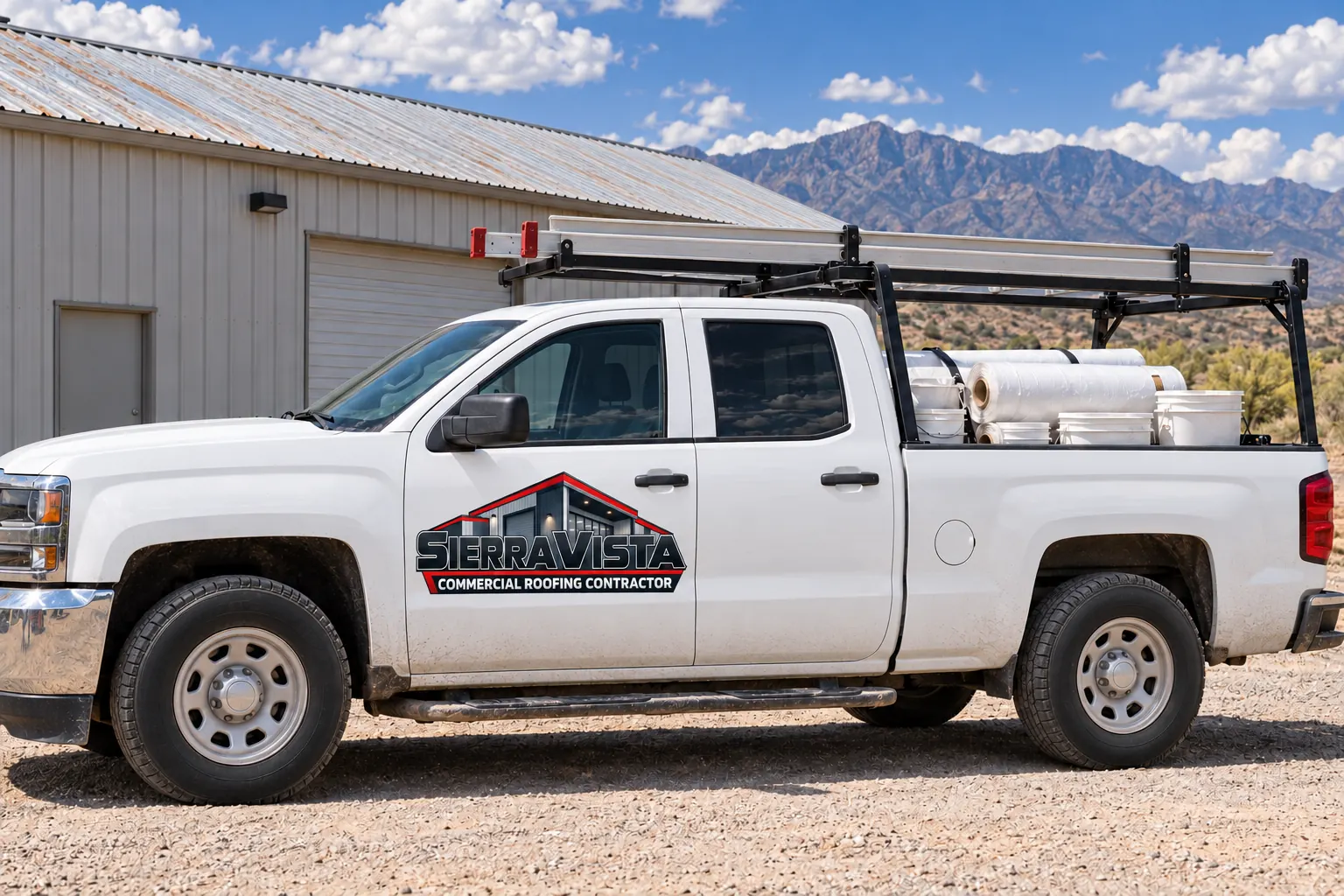
White work pickup loaded with roofing materials beside a metal-roofed light-industrial building

Roofing Around The Loading Dock

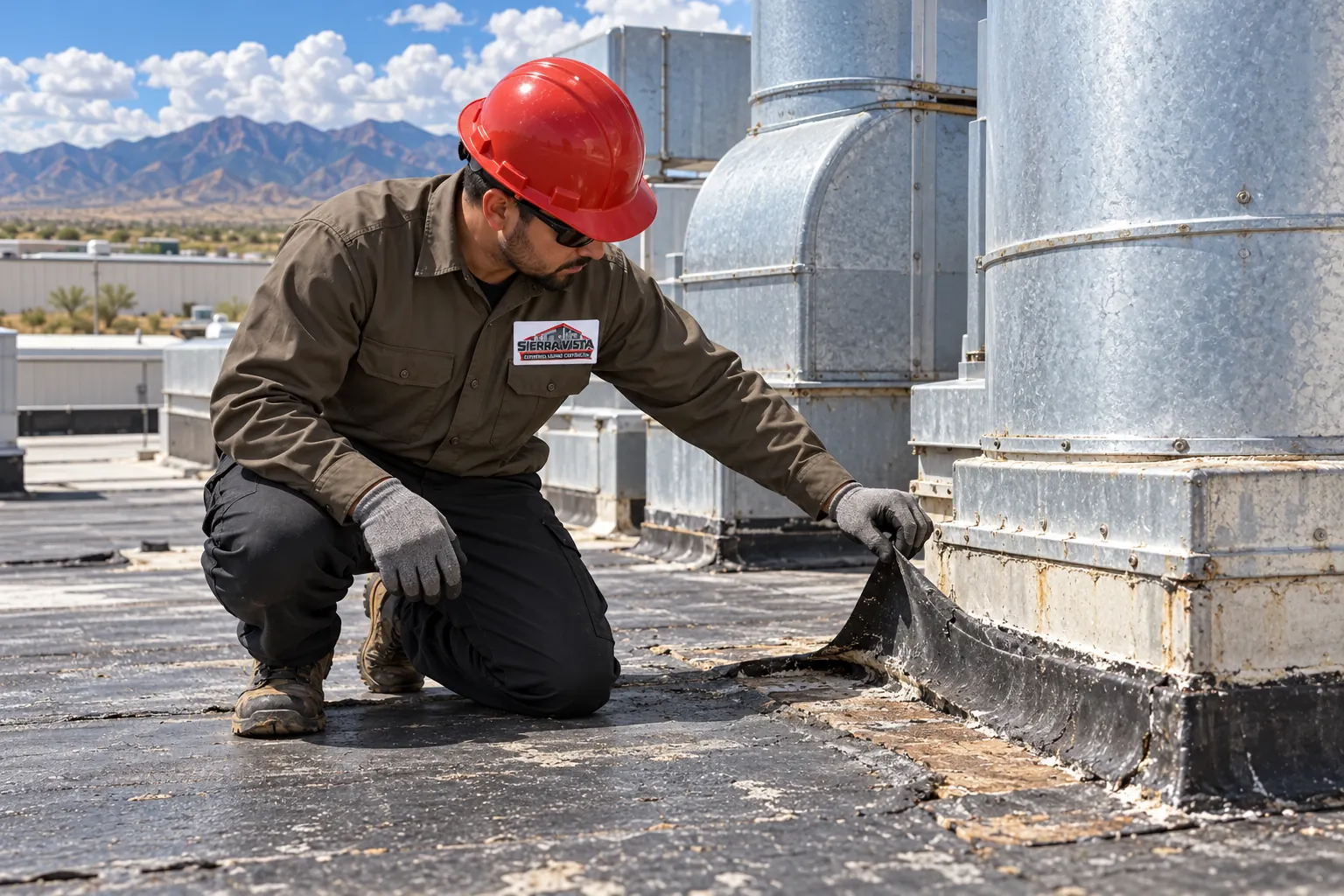
Roofer lifting failed flashing at the base of large process ducts on a factory roof

Benson grew up on the railroad, and it still sits on the Union Pacific main line beside I-10. Transportation, warehousing, and utilities account for about 16.4% of local jobs, so many commercial roofs here cover docks, bays, and long storage floors.

On these buildings, the hard part is keeping trucks moving while the roof is open overhead.

  • Tear-off sections matched to dock and bay schedules
  • Crane lifts and dumpsters kept clear of truck aprons
  • Long roof runs detailed for expansion at seams and edges
  • Daily dry-in so stored goods stay dry

Trouble Spots On Benson Dock And Rail Buildings

Large, simple roofs over busy floors develop a predictable set of problems.

Sun

Split Seams On Long Roof Runs

You See
Open laps or wrinkles along seams that run the length of the building.
What It Means
A long roof expands in afternoon sun and contracts on cold nights. Over the years that movement strains seams and edge terminations, most of all where the sheet is anchored at the walls.
Monsoon

Ponding Over Low Spots

You See
Standing water in the middle of wide bays days after a storm.
What It Means
Wide, nearly flat roofs settle between supports, and water collects there. Tapered insulation or crickets move it toward drains so the membrane stays dry between storms.
Foot Traffic

Worn Paths To Rooftop Units

You See
Scuffed or punctured membrane along the path to HVAC units.
What It Means
Service visits wear a path across the roof. Walkway pads along that path spread the load and protect the sheet where boots and tools land.
Age

Leaks Over Dock Doors

You See
Drips at the dock door header or stains on the wall above it.
What It Means
Dock walls carry roof edges, gutters, and canopy tie-ins that move separately. Flashing there cracks first, and the water lands right where pallets are staged.

What Changes When Benson Roofs Are Redone

These differences show up on the warehouse floor as well as on the roof.

Working Under An Old Warehouse Roof

  • Tarps over pallets near the dock doors
  • Ponding in wide bays after storms
  • Seams opening along the longest runs
  • A trail of patches to the rooftop units
  • Water at the wall above loading doors

Once The New Roof Is On

  • Dock-side flashing rebuilt to keep stock dry
  • Taper or crickets moving water to the drains
  • Seams and edges detailed for expansion
  • Walkway pads along the service route
  • A roof plan that fits the dock schedule

Systems For Benson Docks And Warehouses

Warehouses and shops along I-10 mostly call for one of these two services.

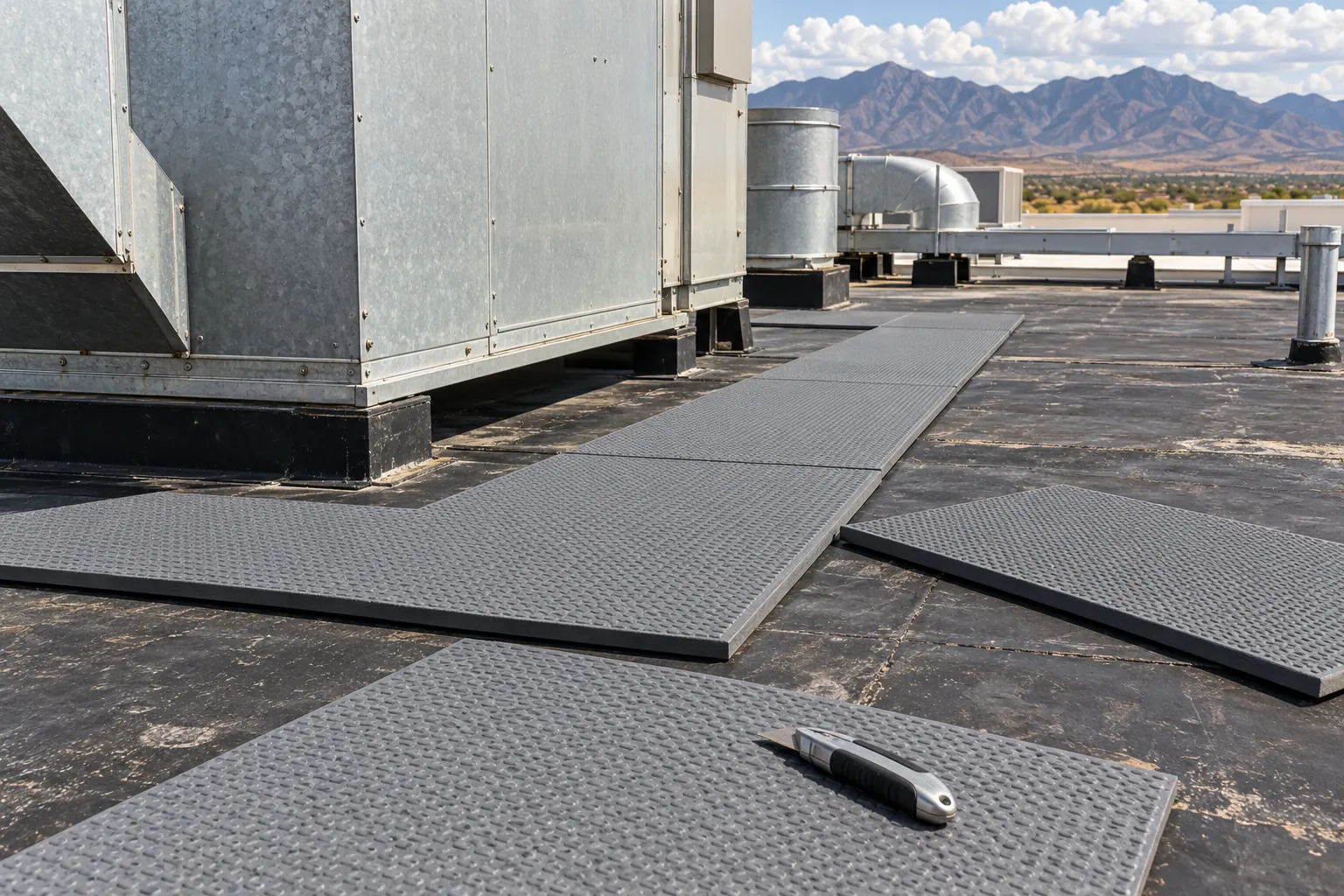
Gray walkway pads laid between rooftop units on a membrane roof

Industrial Roofing

Reinforced flashing at stacks and curbs, walkway pads on service routes, and taper toward drains for busy warehouses and shops.

Industrial roofing for warehouses

Leaks Over The Loading Docks?

Tell us which doors stay busiest and when trucks arrive. We will plan roof work around that schedule and price the job with a free estimate.

What To Have Ready

  • Dock and door layout
  • Truck and delivery hours
  • Roof length and width
  • Photos of leaks at the dock wall

How We Reroof A Working Warehouse

Five steps keep a Benson warehouse running while its roof is replaced or repaired.

  1. On The Roof

    Step 1: Inspect Your Roof

    Seams, edges, drains, curbs, and the dock walls get walked and photographed, and core cuts check the insulation across the widest bays. The findings show which sections need tear-off and which need repair.

  2. Paperwork

    Step 2: Permit Through The City

    Benson runs its own building department, so reroof permits for buildings inside city limits go through the City of Benson. Parcels outside town fall under Cochise County Building Safety.

  3. At The Building

    Step 3: Match Sections To The Dock Schedule

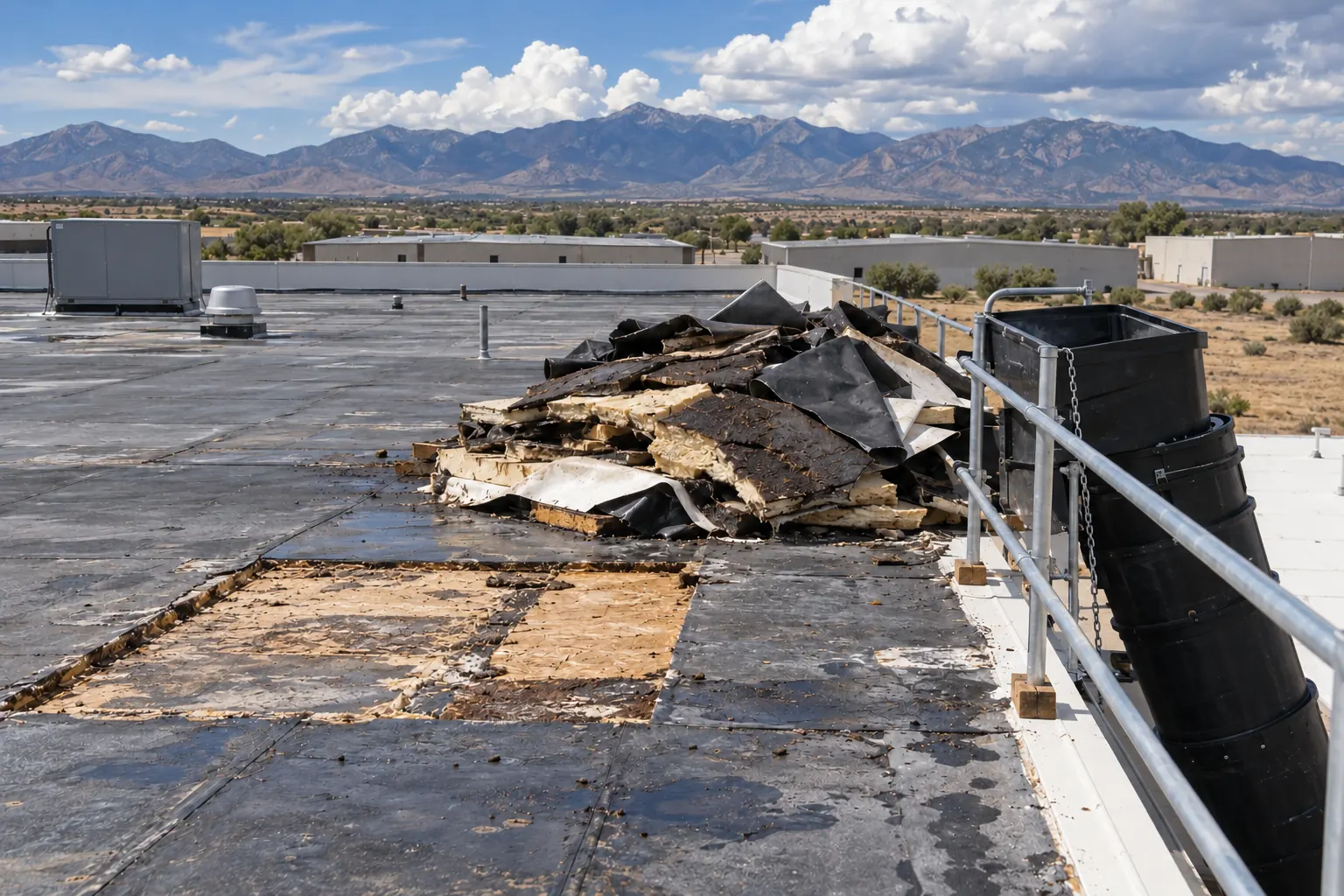
    Roof sections over the busiest doors are scheduled for slower days. Dumpsters and the debris chute sit at the far end of the building, away from truck aprons.

    Torn-off roofing and wet insulation piled near a debris chute beside an opened roof section
  4. On The Roof

    Step 4: Close Each Section Before The Next Truck Window

    Each day's tear-off is sized so it can be covered and sealed before evening or an afternoon storm. That keeps stored goods below dry while the roof is open.

  5. At The Building

    Step 5: Check Drains And Dock Flashing

    Drains get flow-tested with a hose, dock-wall flashing gets a close look, and walkway pads go down along the service route before the final walk.

Benson Owners Ask About Docks, Permits, And Long Roofs

Can you work on our roof without shutting down the business?

In most cases, yes. Commercial roof work can be staged so a warehouse, shop, or office stays open underneath it.

That means opening part of the roof at a time, doing noisy tear-off or odor-producing work before hours or on weekends, coordinating HVAC shutdowns, fresh-air intakes, and deliveries with your facility manager, and keeping cranes and dumpsters clear of dock aprons and entrances. In monsoon season, open areas are sealed daily before afternoon storms.

Why do seams fail first on long warehouse roofs?

Movement adds up over distance. A long roof grows in afternoon sun and shrinks on cold nights, and the ends of the sheet and the seams take that strain. Expansion details at walls and edges, plus well-welded seams, keep the movement from tearing the roof open.

Can ponding in wide bays be fixed without rebuilding the roof?

Often, yes. Tapered insulation or crickets added during a reroof steer water to the existing drains. On a repair-only job, adding a drain or scupper at the low spot helps, but slope correction works best when the old roofing comes off.

What causes leaks above dock doors?

Flashing at the dock wall is the usual culprit. That wall carries the roof edge, gutters, and sometimes a canopy, and each moves differently in heat and wind. When the flashing cracks, water runs down inside the wall and appears at the door header.

Do we need walkway pads to the rooftop units?

On a roof with regular service visits, yes. Walkway pads spread the weight of boots, ladders, and tools so the membrane is protected along the path. They also show technicians exactly where to walk, which keeps them off the weakest parts of the roof.

Does Benson or the county permit our reroof?

The City of Benson Building Department covers property inside city limits, and a reroof or major roof repair on a commercial building goes through that office. Parcels outside Benson fall under Cochise County Building Safety, where commercial projects need permits too.

Does Benson's lower elevation change the roof choice?

Somewhat. At about 3,585 feet, Benson sits roughly 1,000 feet lower than Sierra Vista. Sun and summer heat still drive cooling in offices and conditioned storage, so a reflective TPO or coated metal surface earns its place there, and wind, hail, and freezes still shape seam and edge details.

Talk To A Benson Commercial Roofing Contractor Before Dock Season

Share your dock schedule and roof size. We will inspect the roof and lay out a section-by-section plan with a free estimate.

Call UsGet A Free Estimate