How does the local weather wear down a roof in Whetstone?
Four forces do the damage, and each hits a different part of the roof. High-altitude UV dries sealants and older membranes, spring wind lifts edges and exposed fasteners, monsoon storms bring hail and clogged drains, and winter freezes open seam gaps.
On an open crossroads lot, wind carries the most weight on that list, so inspections start at the edges.
Why do roofs fail at the corners first?
Wind pressure peaks at corners and edges. Air speeds up as it wraps around a building and pulls hardest on the first few feet of roof, which is why design standards call for more fasteners there than in the middle. Corners fastened like the field lift first.
Do we need a permit for roof repairs in Whetstone?
For commercial work, plan on it. Cochise County Building Safety reviews jobs in unincorporated areas like Whetstone, and commercial projects sit outside its exemptions. A permit application for a reroof includes a site plan along with the contractor information the county asks for.
Is metal or TPO better for a windy, exposed lot?
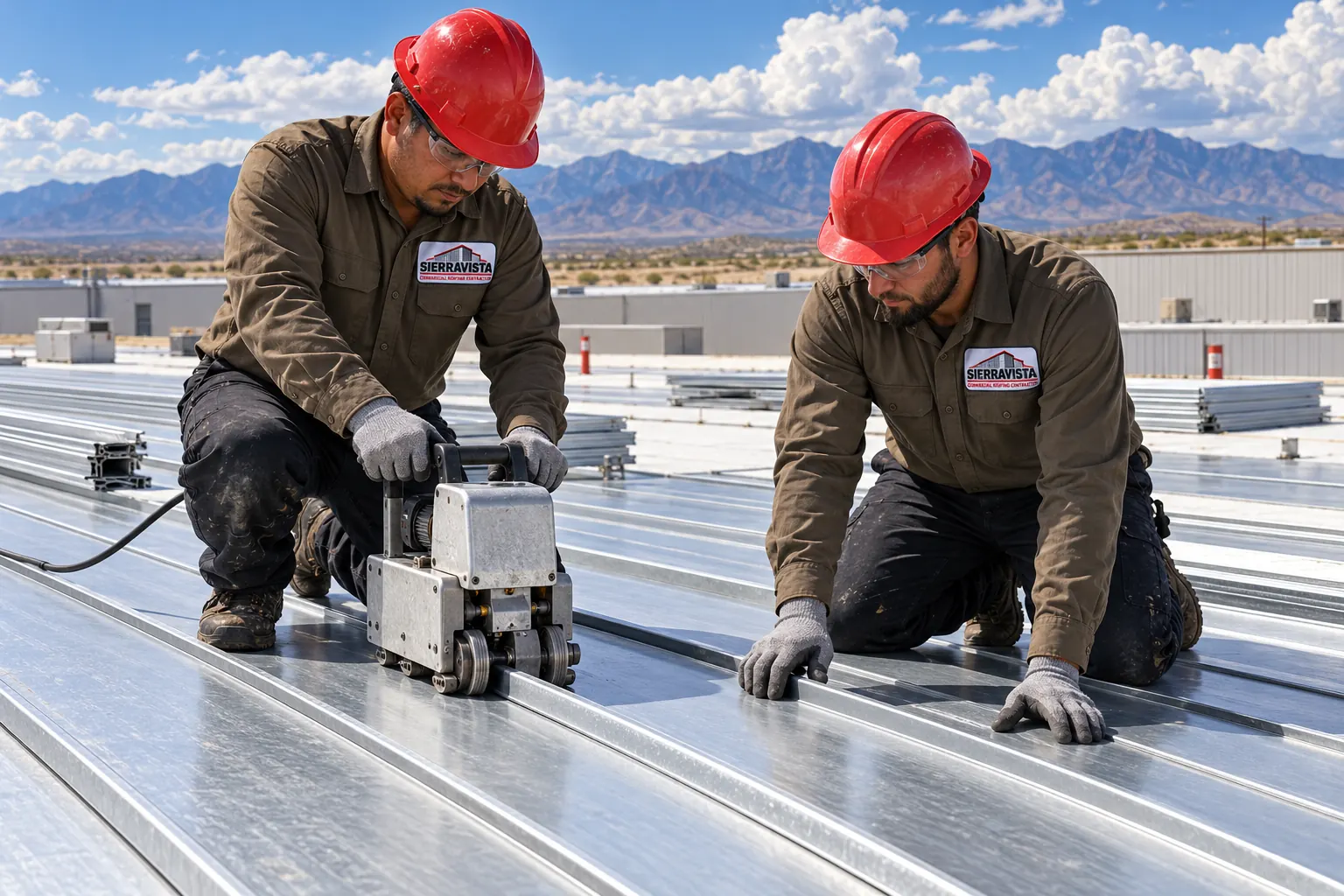
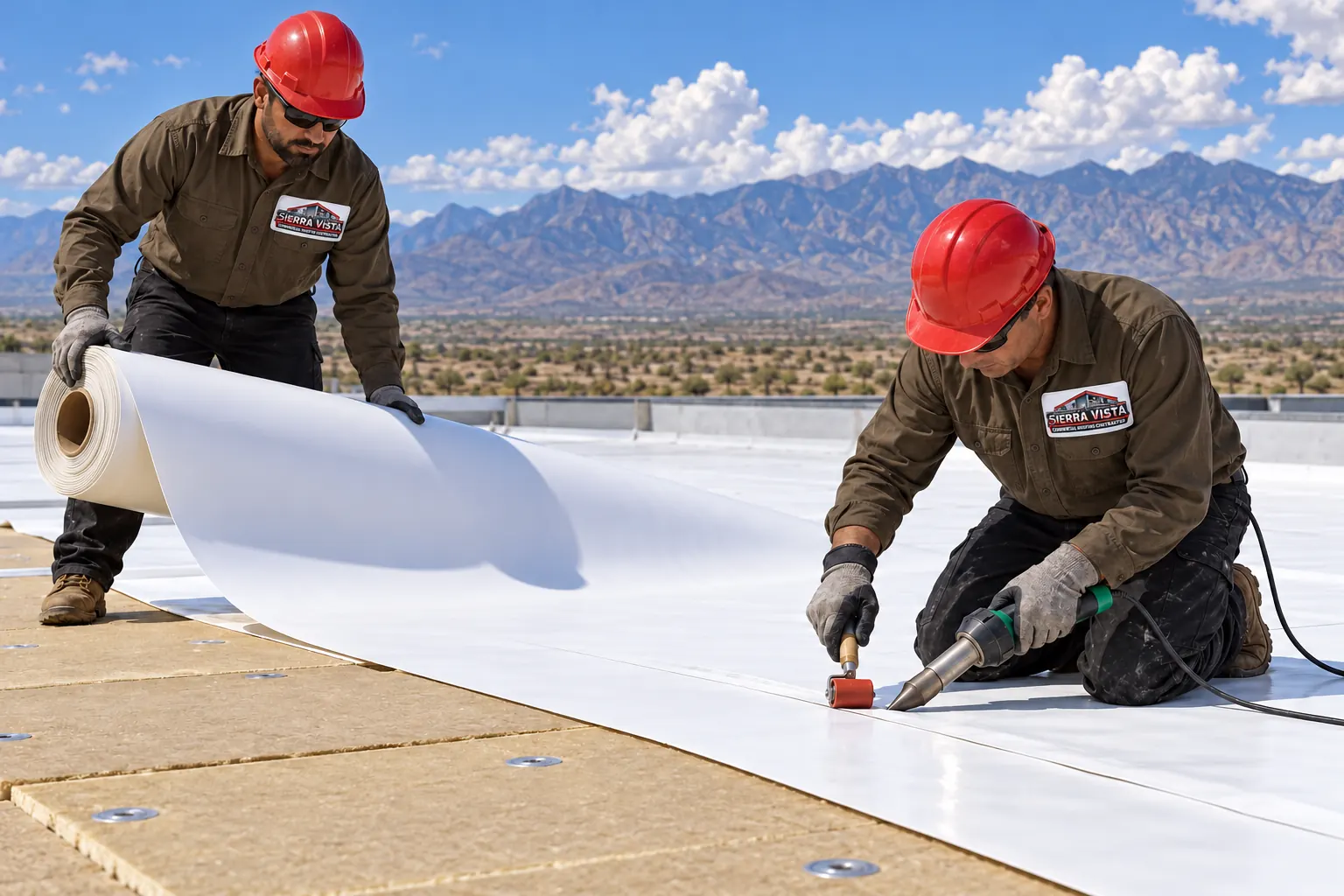
Both hold up when they are fastened for an open lot. Standing-seam metal relies on clips spaced closer at the edges, and TPO relies on denser fastening or full adhesion at the perimeter. The choice usually comes down to roof slope and how the building is used.
Can loose coping be re-secured, or does it need replacing?
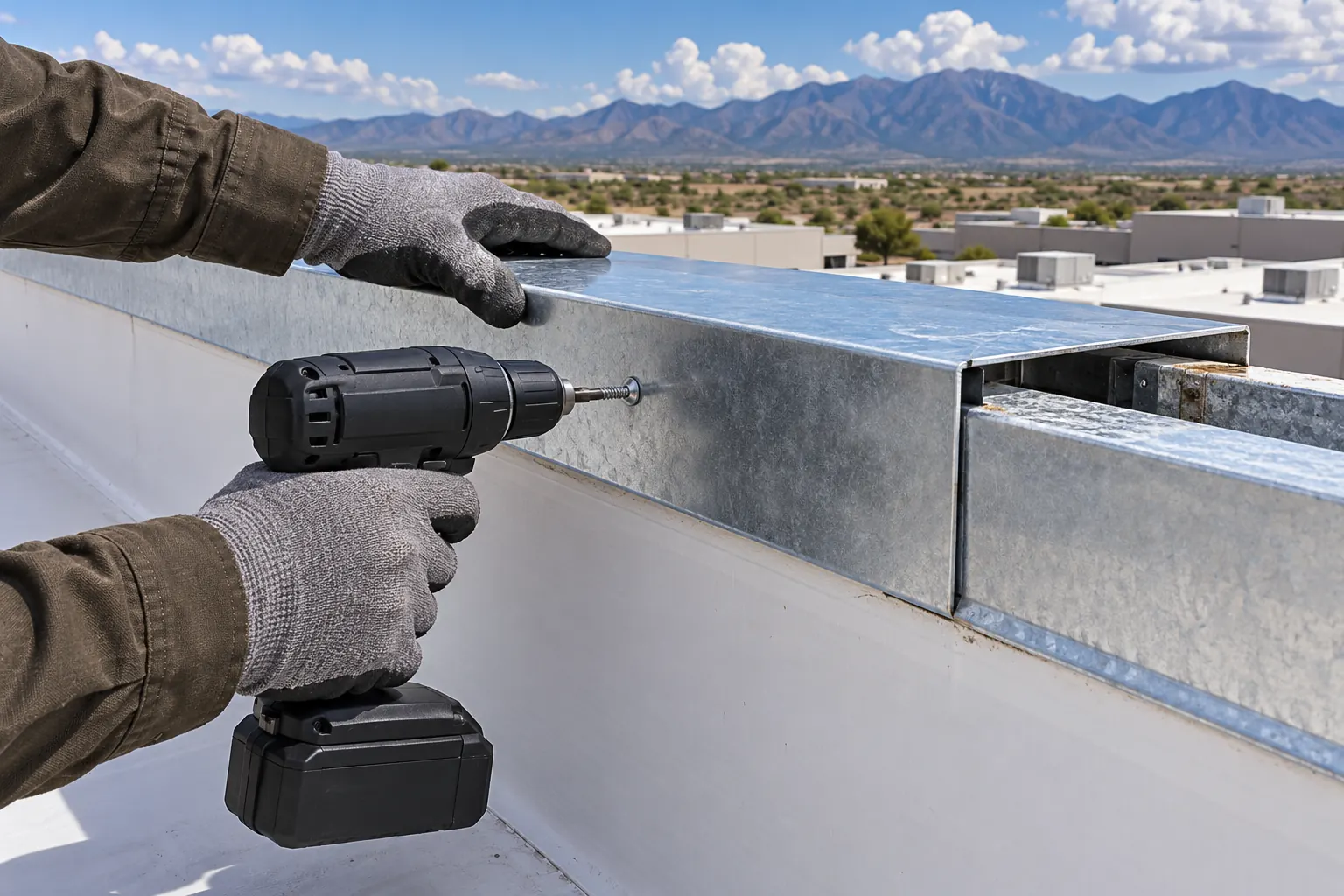
Bent or torn coping gets replaced, and straight coping with loose clips can be re-secured. The wood nailer under the cap gets checked too, because a wet or split nailer will not hold new fasteners. Sealing the joints between sections keeps rain out of the parapet.
Why do our scuppers keep clogging?
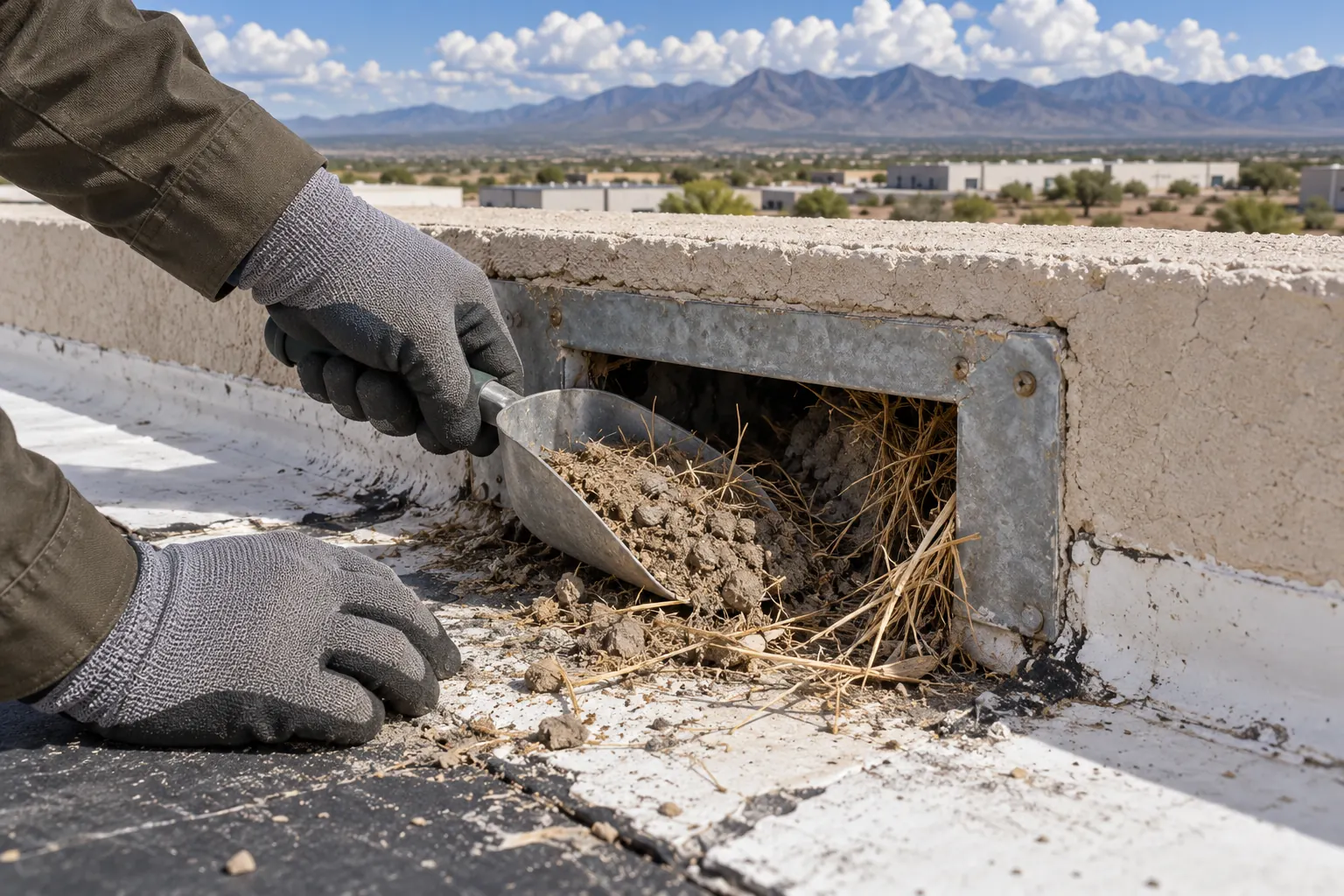
Open land lets wind carry dust and dry grass across the roof, and it settles where water collects. Scuppers and drains on the downwind side of a parapet fill fastest. Clearing them before monsoon season and after big wind events keeps storm water moving off the roof.
What should we do after a monsoon downburst?
Look from the ground first and keep staff off the roof until loose metal is checked. Photograph any lifted edges, note the date, and call for an inspection. Small punctures from blown debris often stay hidden until the next rain, so a close look on the roof matters.
How do you know the fasteners will hold?
Fastener type, spacing, and pull-out strength have to match the deck and the exposure. On older decks, a few fasteners get pull-tested before a pattern is chosen, and on new work the manufacturer spacing for corners and perimeter is followed.