Chalky, Worn Membrane Surface
- You See
- Dull, chalky white sheet with reinforcing scrim showing in a few spots.
- What It Means
- Years of UV thin the top ply. Once the scrim shows, the sheet is near the end of its life and patches stop holding well.

Low-Slope Membrane Roofs
We install, replace, and repair white TPO roofs on Sierra Vista offices, clinics, and retail strips. A TPO roofing contractor visit starts with an inspection of seams, drains, and deck.
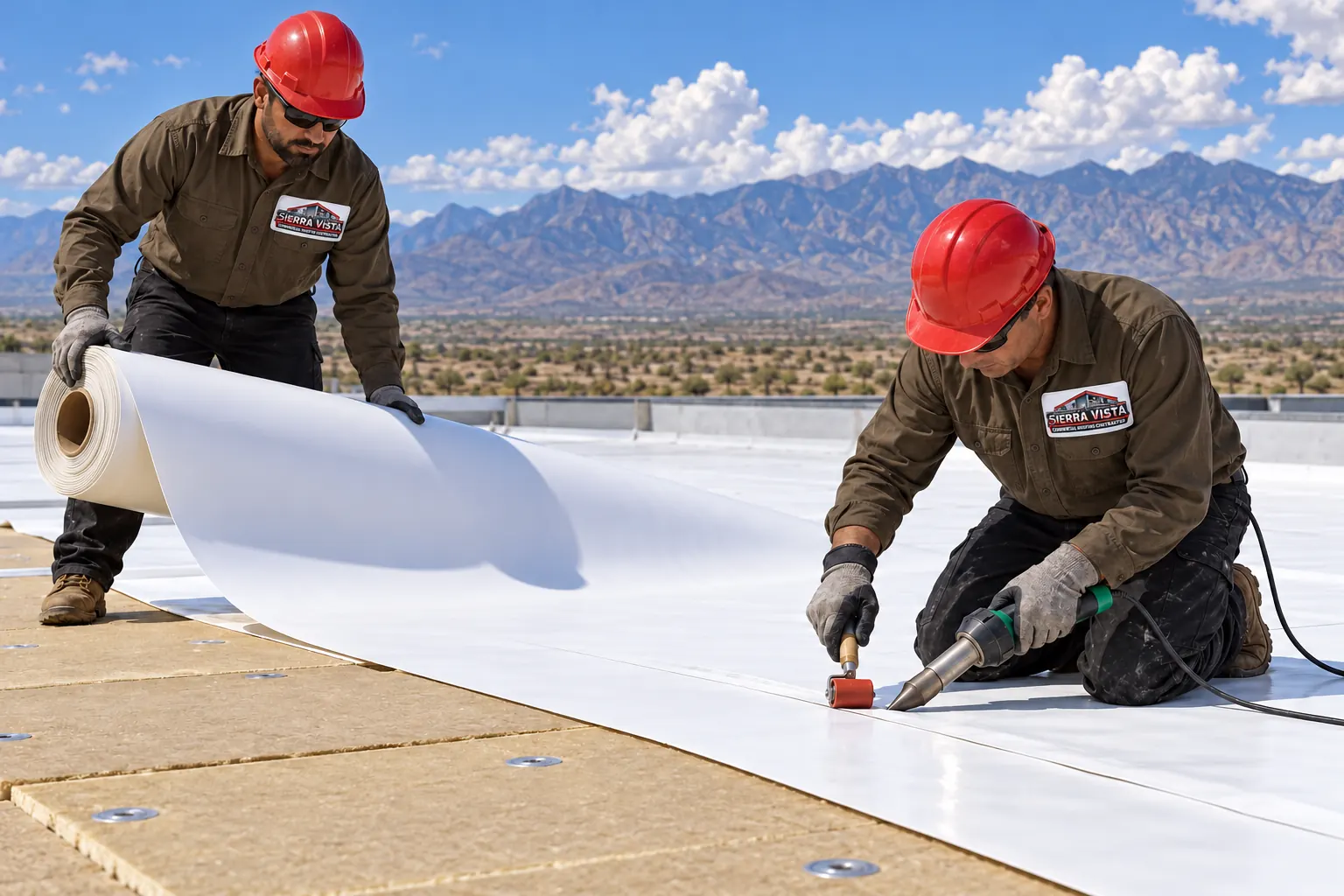
TPO suits flat and low-slope roofs with a dry, solid deck. The right column lists what gets fixed or rethought before a new sheet goes down.
Flat roofs here take sun, wind, hail, and monsoon water. These are the TPO problems that bring owners to us.
Most TPO work here falls into one of these five options. A core sample and a walk over the deck point to the right one.
| Option | When It Fits | What It Involves |
|---|---|---|
| Tear-off and replace | Wet insulation, several old layers, or deck damage | Old roof removed to the deck, repairs made, then new insulation, cover board, and welded TPO |
| Recover over the existing roof | One dry existing roof that code and core cuts allow covering | Cover board fastened over the old surface, then a new TPO sheet welded on top |
| New TPO on a new or rebuilt deck | Additions, deck replacement, or a full roof rebuild | Insulation, tapered crickets toward drains, and a fully welded sheet |
| TPO repair | Local seam failures, punctures, or flashing gaps | Membrane cleaned and prepped, heat-welded patches, and new flashing |
| 60 or 80 mil sheet | Hail exposure and heavy rooftop foot traffic | Thicker sheet where hail and service visits hit hardest |
These are the changes facility managers usually notice once a worn flat roof is replaced with welded TPO.
Ponding after storms is the most common reason a TPO roof wears early. Tell us where the water collects and roughly how large the roof is.
What To Have Ready
Five steps take a flat roof from the first inspection to a welded, probed TPO surface.
Each seam, curb, drain, and edge gets a close look, and a core cut shows whether the insulation under the sheet is dry. You see the photos before any decision is made.
Core results and the number of existing layers decide it. A dry single roof can take a recover board, while wet or stacked roofs come off down to the deck.
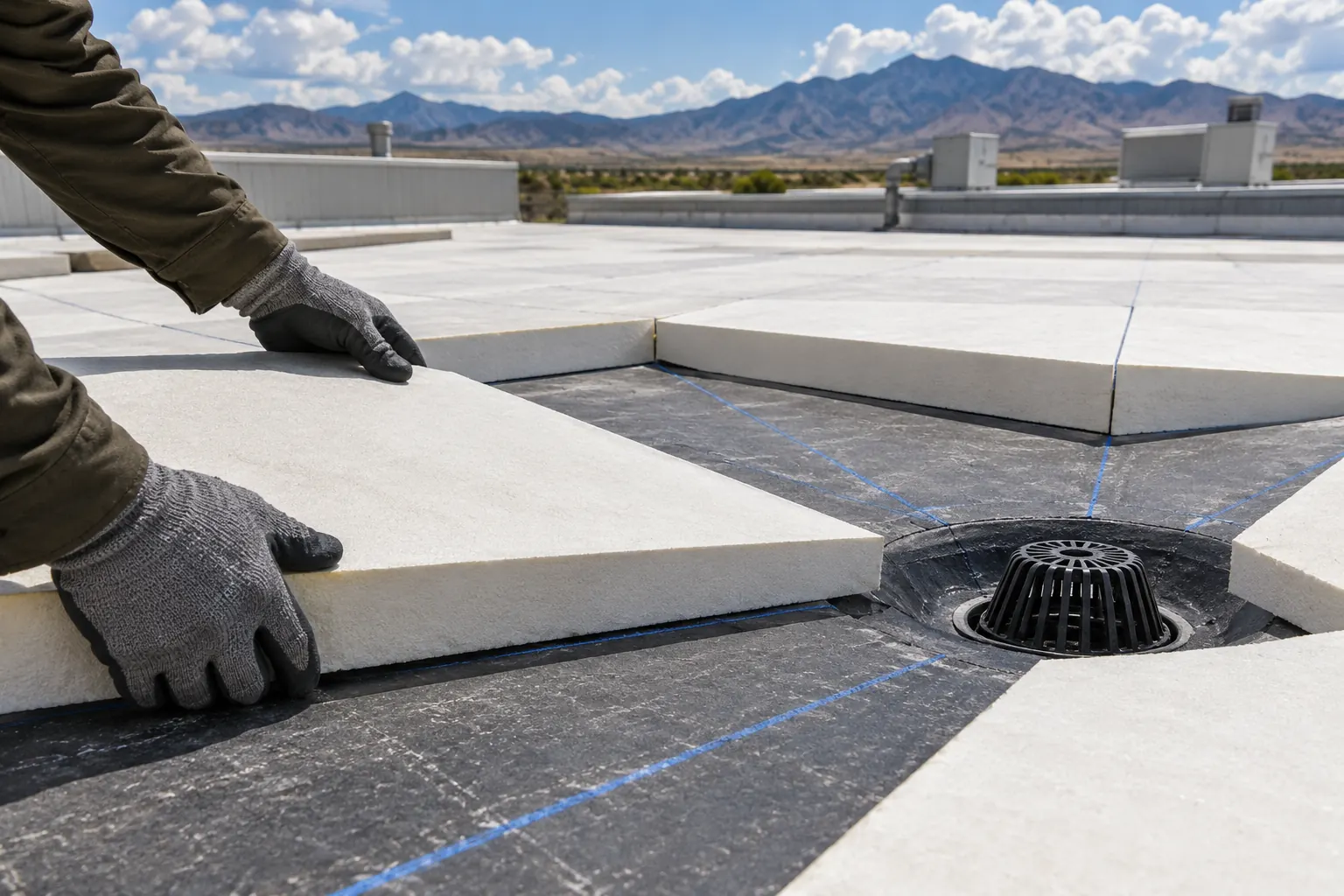
Tapered insulation is laid toward each drain, then a cover board goes on top. That layer adds hail resistance and gives the TPO a firm, even base.
Sheets are rolled out and hot-air welded one roof section at a time, so offices and clinics below stay open. Open areas are sealed before afternoon monsoon storms.
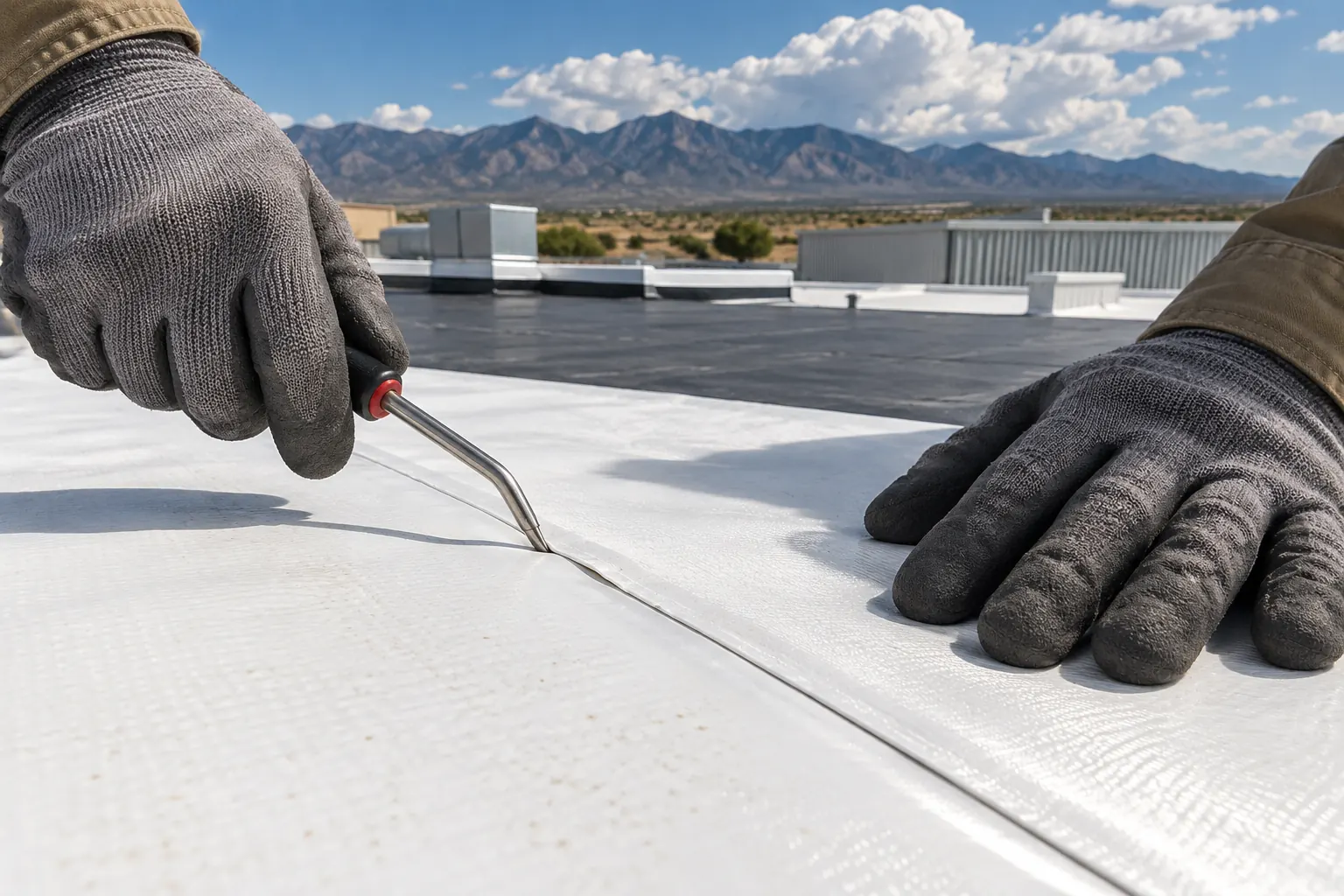
Finished laps get a seam probe along their full length, and curbs, pipes, and edges get new flashing. You get photos of the welds and details for your records.
A few flat roofs here are better served by another approach. These two services cover those buildings.
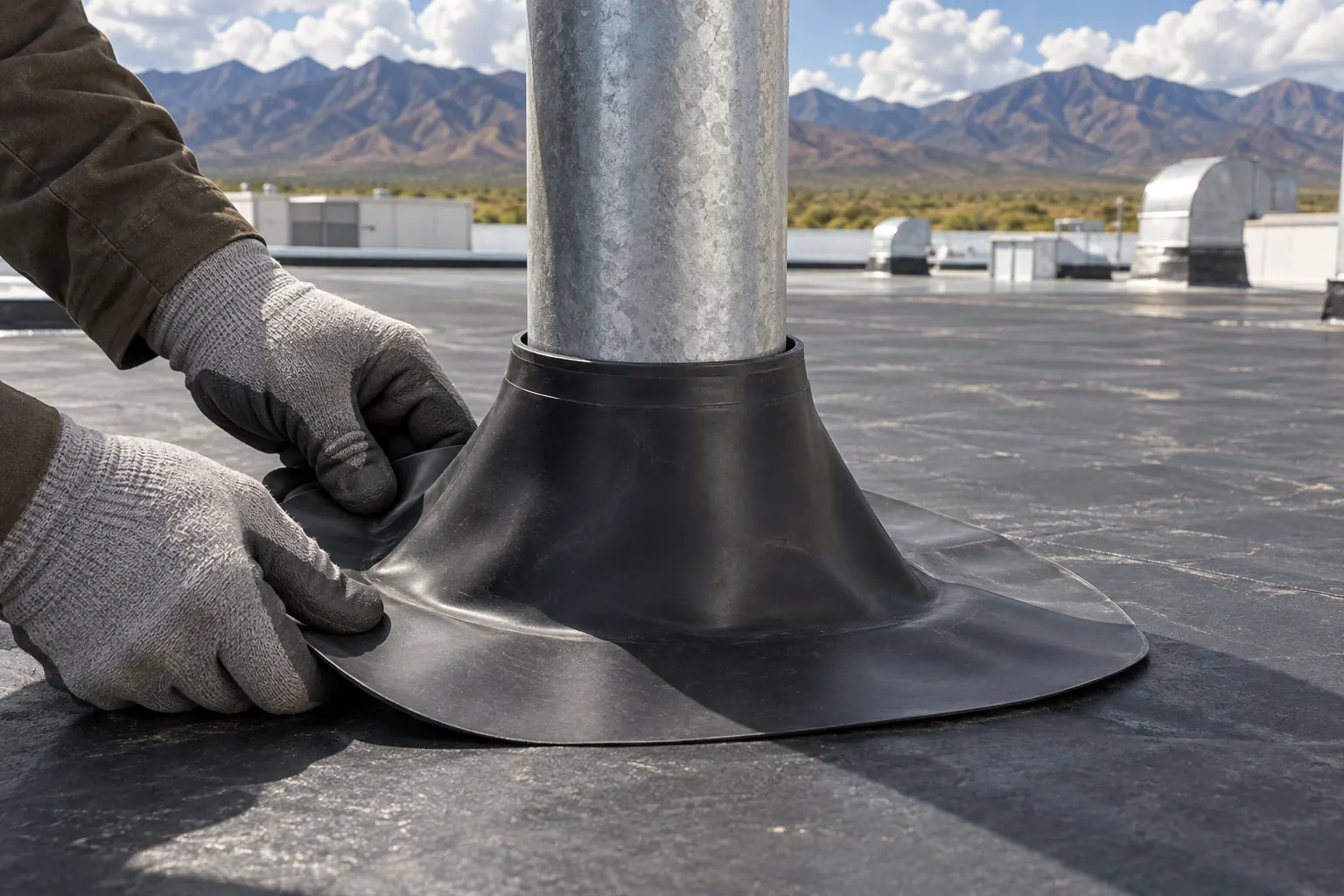
Existing rubber roofs with dry insulation can often be repaired or extended with matching EPDM instead of being torn off for TPO.
EPDM roof repair and replacement in Sierra Vista
Plants and shops with process exhaust need reinforced flashing and walkway systems beyond a standard TPO install.
Industrial roofing for plants and shopsFor most low-slope office, clinic, and retail roofs here, yes. The white surface reflects much of the strong sun at this elevation, and heat-welded seams hold up when monsoon rain sits on the roof for hours.
It fits best on buildings that cool most of the year, retail strips with wide open roof areas, and offices near the Fort Huachuca gate that want a reflective, low-upkeep surface.
Thicker sheet earns its keep where hail and foot traffic meet. A 60 mil sheet covers most roofs, while 80 mil adds wear layer around rooftop units, along service paths, and on buildings that take the brunt of summer hail. Core cuts and how often techs visit the roof decide where the extra thickness pays off.
Not always. A dry roof with a single layer underneath can stay, and code limits how many layers a building may carry. We core the roof to check moisture and count layers, then a cover board is fastened over the old surface before the TPO goes on.
Wet insulation or a soft deck means tear-off, because trapped water keeps rotting the deck under a new sheet.
In most cases, yes. TPO goes on in sections, so only part of the roof is open at a time. Crane lifts and tear-off are planned around patient hours, fresh-air intakes stay clear of the work, and each open section is sealed before the crew leaves.
The work under the sheet moves the price most. Tear-off versus recover, how much insulation is wet, tapered insulation to fix ponding, cover board, sheet thickness, and the number of curbs and pipes to flash all change the total. A ballpark estimate gives a range, and the inspection sets the scope.
Often, if the sheet is still flexible and the insulation below is dry. Weathered TPO has to be cleaned and prepped before a patch will weld, and badly aged sheet sometimes refuses to take a weld at all. A test weld during the inspection shows whether repair is realistic.
Send a few roof details or call. We will inspect the seams, drains, and deck and lay out TPO options for your building.
Leave a name and number and we'll call about your building's roof. Or call now: (623) 310-0174